
Which statement about table formats in a lakehouse is correct?
Select an answer to reveal the explanation.
Short Explanation
The table format sits on top of the storage and adds the database-like guarantees you need. It doesn't replace the storage, doesn't lock the table to one engine, and never asks you to switch the metadata off.
Full Explanation
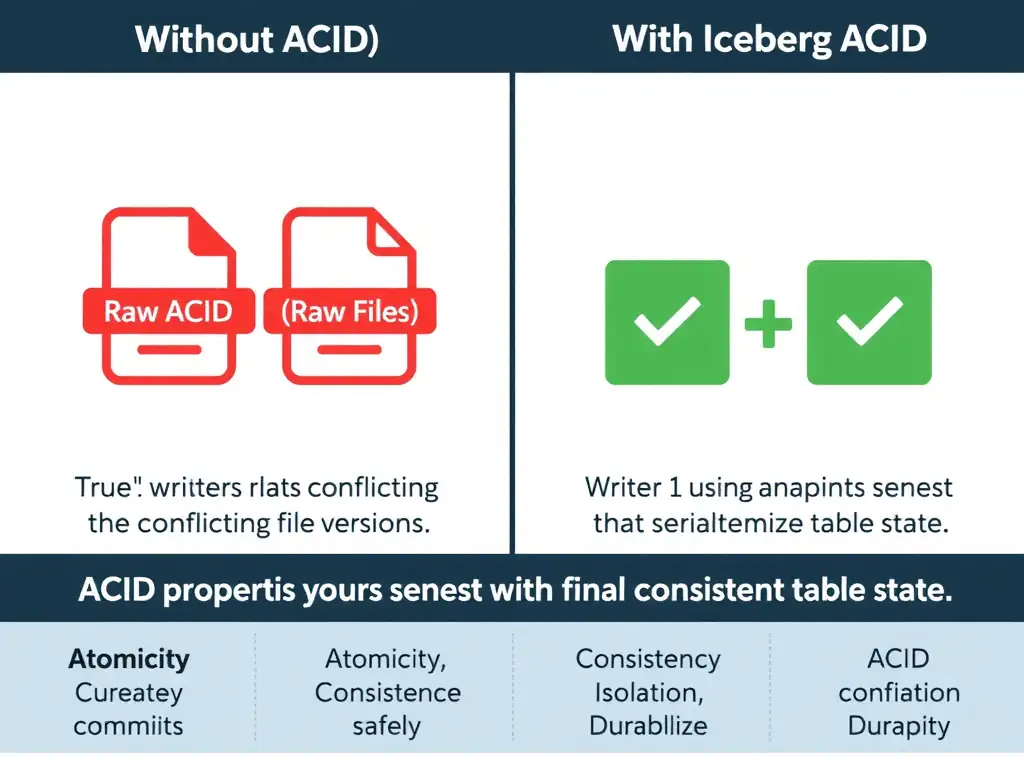
The correct statement is the one saying table formats add transactional consistency, schema evolution, and safe concurrent access to data held in open formats on object storage. The table format is a metadata layer over data files in open formats on object storage. It supplies the guarantees a lakehouse needs, including atomic commits, evolvable schemas, and coordinated concurrent access, without changing where the bytes live.
The statement that table formats replace object storage as the place the data is physically held is incorrect because the data remains in object storage; the format describes and coordinates it.
The statement that they restrict a table to a single query engine to guarantee consistency is incorrect and inverts the value proposition: coordinated commits are what let several engines share one table safely.
The statement that they require metadata tracking to be disabled for high-throughput writes is incorrect because the metadata is the mechanism providing the guarantees, so disabling it for throughput trades away correctness.
For the exam, hold the layering clear: open files in object storage, table format above them, engines and governance above that.