
Which statement about storage tiering in a lakehouse is correct?
Select an answer to reveal the explanation.
Short Explanation
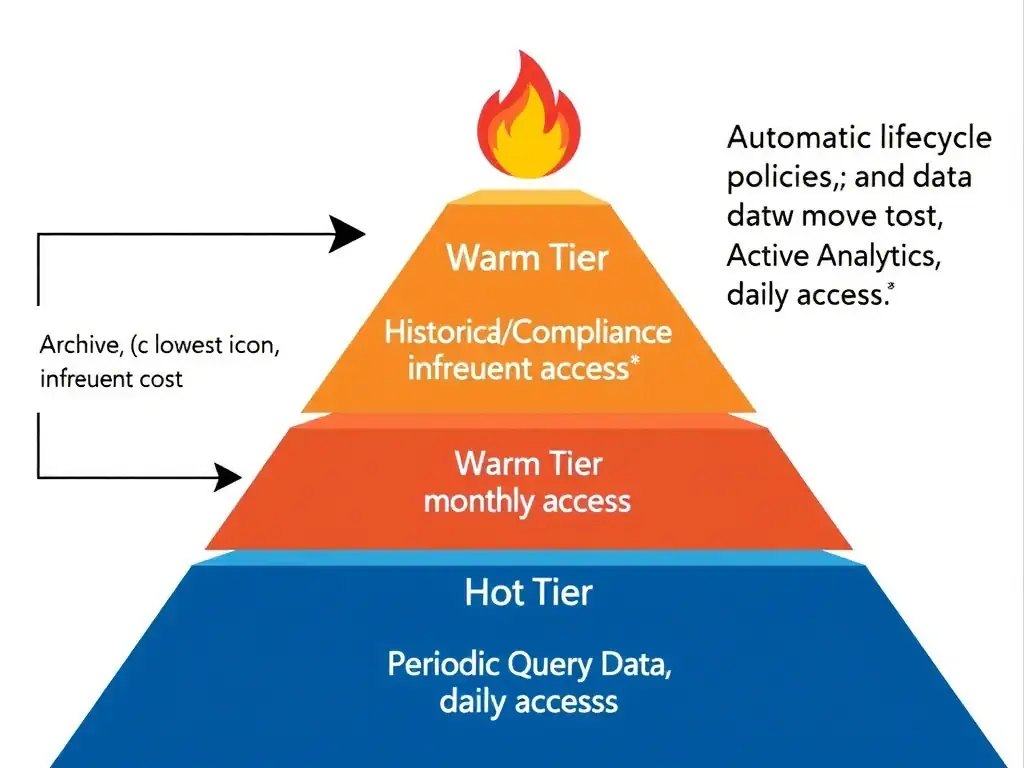
Match the tier to how you actually use the data. If you put everything on one tier, you either overspend or underperform. Tiering is about where data lives, not deleting it.
Full Explanation
The correct statement says data is placed on tiers according to access pattern, performance need, and retention requirement, so cost tracks the value each portion delivers. Tiering aligns storage spend with usage: frequently read data justifies a performance tier, while rarely read but retained data belongs on a cheaper one. The claim that all data should occupy one tier so query performance is uniform is wrong because uniform placement means either paying premium rates for cold data or accepting archival latency for hot data. The claim that tier placement is determined by the table format the data uses is wrong because format is orthogonal to placement; identical formats sit on different tiers according to access pattern. The claim that tiering replaces the need for retention policies is wrong and conflates two things: moving data to a cheaper tier retains it, whereas a retention policy governs how long it is kept and when it is removed. For the exam, distinguish tiering, where data lives, from retention, which is how long it lives at all.