
After six months, a federated connection to a partner's reporting database is generating enough load that the partner asks the team to reduce it. The queries are dashboard refreshes over largely historical data. What is the right change?
Select an answer to reveal the explanation.
Short Explanation
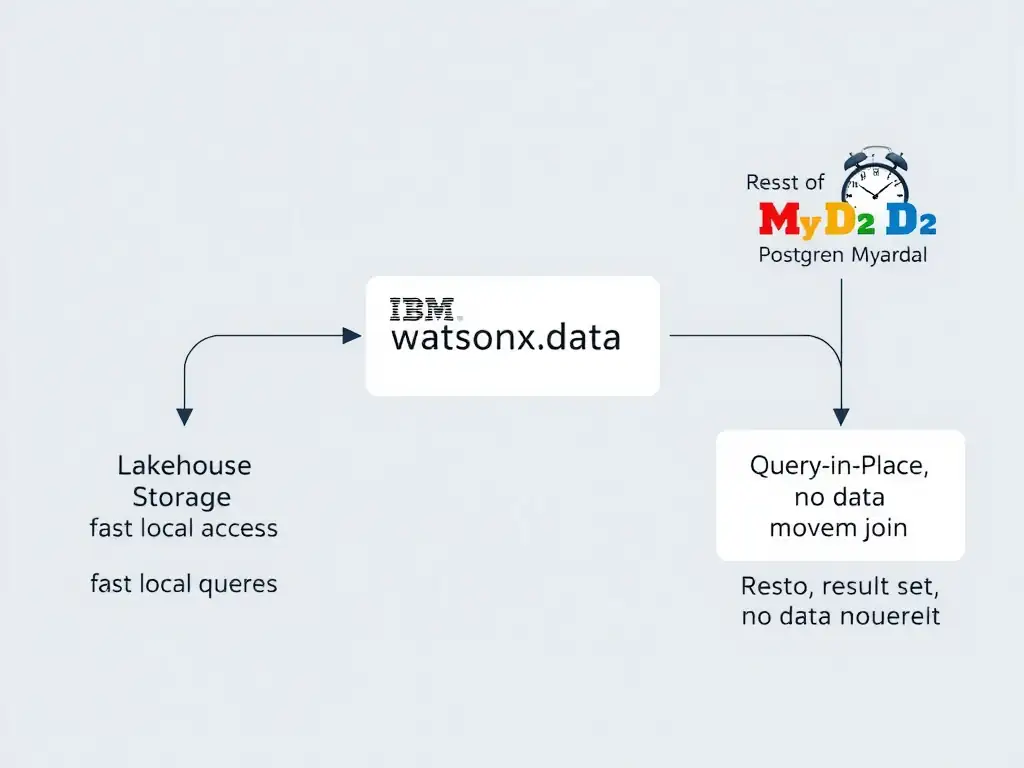
If most of the data is historical, you shouldn't keep hammering the partner's production system for it. Ingest the stable history into the lakehouse on a schedule, then federate only the slice that truly needs to be current. That cuts their load without hurting dashboard freshness.
Full Explanation
The right change is to ingest the historical portion into the lakehouse on a schedule and federate only what genuinely needs to be current. When federated load becomes a problem and the data being read is mostly historical, the requirement that justified federation—freshness—applies to only a small part of it. Ingesting the stable history into the lakehouse means dashboard refreshes read local optimized tables, and federation is reserved for the recent slice where currency actually matters.
Increasing the local engine size so the federated queries complete faster and hold the connection for less time is incorrect because a larger local engine does not reduce the work the remote system performs. The partner's load is generated by the queries sent to them, and those are unchanged.
Adding a second federated connection so the load is spread across two paths to the same database is incorrect because two connections to one database are still one database serving the same queries. Spreading requests across paths does not reduce their total.
Moving the dashboards to a business-intelligence tool that connects to the partner database directly is incorrect because it moves the same load off the platform and onto a different client while also taking the dashboards outside lakehouse governance.
For the exam, watch for scenarios where the freshness requirement applies to only part of the data—splitting the workload is usually the intended answer.