
Why is it wrong to treat every failed query as an indication that data has been lost?
Select an answer to reveal the explanation.
Short Explanation
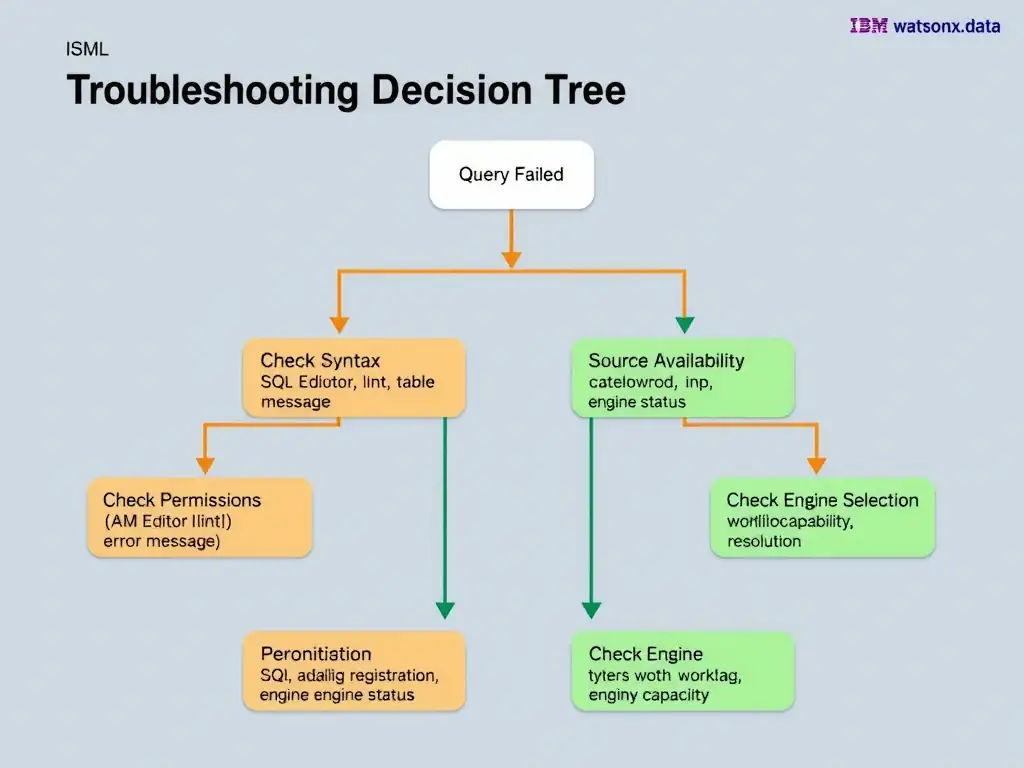
Most failed queries are just syntax, permission, availability, or engine-selection problems, so the data is still there. If you jump to data loss, you can start a restore you did not need and make things worse.
Full Explanation
The correct choice is the one saying most failures are syntax, permission, availability, or engine-selection issues that leave the data intact, and that assuming loss triggers unnecessary and risky recovery work. Query failures are dominated by causes that leave data untouched. Concluding data loss leads to restores and rollbacks that consume time, can overwrite good data, and distract from the actual fault. The choice claiming data loss is impossible in a lakehouse is wrong because data loss is not impossible; durability is high, but the claim is too strong. The choice saying failed queries are not recorded is wrong because failures are recorded in query history, which is where diagnosis begins. The choice saying recovery is automatic is wrong because recovery is not automatic, and the distinction very much matters; it determines whether you edit a statement or invoke a recovery procedure. For the exam, let the error class drive the conclusion rather than assuming the worst case.