
A growing lakehouse now holds several hundred tables and analysts increasingly cannot tell which table to use. Which practice, supported through Data manager, most directly addresses this?
Select an answer to reveal the explanation.
Short Explanation
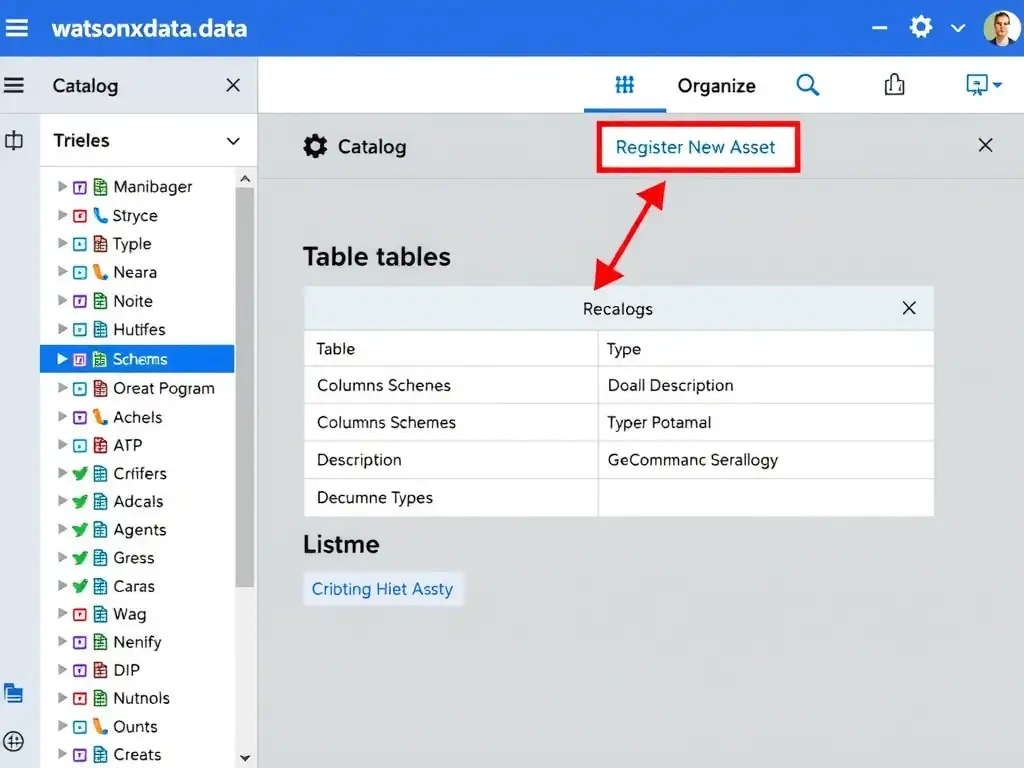
Discoverability is an organisation problem, not a capacity problem. You need clear catalogs and schemas, meaningful names, and descriptions so someone browsing can tell what a table is for without querying it.
Full Explanation
The correct practice is organising assets into clear catalogs and schemas with meaningful names and descriptions so purpose is evident at browse time. As a lakehouse grows, structure and description are what keep it navigable. Grouping assets into catalogs and schemas that reflect domain and purpose, with names and descriptions that say what a table contains, lets analysts identify the right one while browsing.
The practice of reducing the number of tables by merging unrelated datasets into wider tables is incorrect because merging unrelated datasets produces wide tables with unclear grain, which is harder to understand rather than easier.
The practice of restricting browsing so analysts see only the three tables their manager approves is incorrect because restricting visibility to a pre-approved list prevents discovery outright and creates an approval bottleneck for every new question.
The practice of increasing engine capacity so exploratory queries against candidate tables run faster is incorrect because faster queries do not tell an analyst which table is authoritative. They simply reach the wrong answer sooner.
For the exam, connect discoverability to organisation and metadata quality rather than to access restriction or compute.