
Which description best fits the role of the catalog in watsonx.data?
Select an answer to reveal the explanation.
Short Explanation
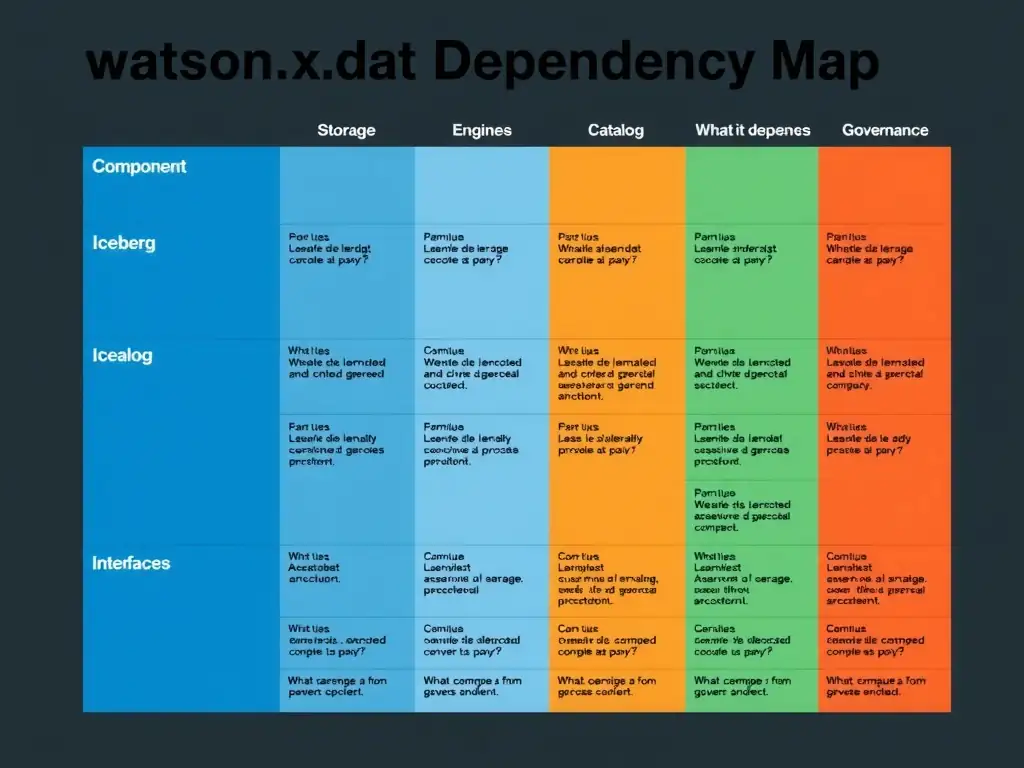
You can think of the catalog as the translator between files and tables. Without it, a bucket holds objects; with it, an engine sees schemas, columns, types and which files make up the current state of a table. It stores no rows and runs no queries - it just makes the bytes mean something.
Full Explanation
The description that says it holds the metadata defining tables over files in storage, so engines can query them as tables, is correct. The catalog supplies table metadata: schemas, column definitions, types and the pointers to the data files that make up each table's current state. That metadata is what allows an engine to treat a set of objects in a bucket as a queryable table.
The description saying it stores the table data itself, with object storage acting as a backup target, is incorrect because the data lives on object storage as the system of record, not as a backup. The catalog describes that data; it does not hold it.
The description saying it schedules query execution across the available engines is incorrect because scheduling and execution belong to the engines. The catalog is not in the execution path beyond supplying the metadata an engine needs to plan.
The description saying it is the audit log recording which users queried which tables is incorrect because access records belong to auditing and query history. The catalog describes structure, not activity.
For the exam, hold the one-line definitions: bucket stores bytes, catalog defines tables, engine executes SQL, governance decides who sees what.