
Which sequence best describes a systematic approach to a failed query?
Select an answer to reveal the explanation.
Short Explanation
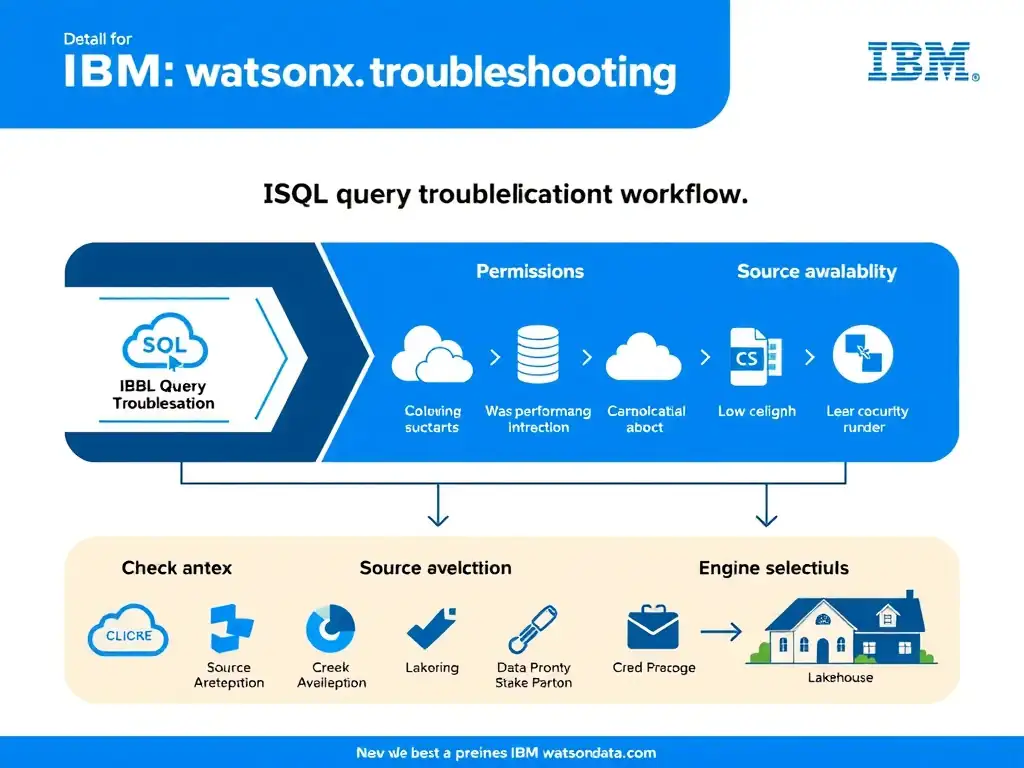
Start with the cheapest evidence: read the error, check the syntax, verify permissions, confirm the sources, then consider the engine. You don't change expensive things before you know what failed.
Full Explanation
The correct sequence starts with the error, checks the statement's syntax, verifies the identity's permissions on the objects, confirms the sources are available, then considers whether the right engine was selected. An effective sequence works from evidence outward, starting with the error itself and moving through causes in rough order of likelihood and cost. Most failures are resolved at the syntax or permission step.
The option that resizes the engine, re-registers the tables, and widens the user's permissions is incorrect because it makes three consequential changes with no diagnosis, and widening permissions as a troubleshooting step is a governance failure.
The option that restores the table from backup and reruns the query to confirm the data returned is incorrect because a restore is a heavyweight, risky action based on an unfounded assumption of data loss.
The option that clears the query history and resubmits the statement on a new engine is incorrect because clearing history destroys evidence needed to diagnose the failure.
For the exam, memorise the checklist: syntax, permissions, source availability, engine selection.