
A proof of concept is being promoted to production. Which governance work is required before data is opened to a wider audience?
Select an answer to reveal the explanation.
Short Explanation
Three things before you widen the door: the assets are registered and described, the policies say who gets what, and lineage matches the pipeline you are actually running. Open-then-narrow is the version that ends up in an audit finding.
Full Explanation
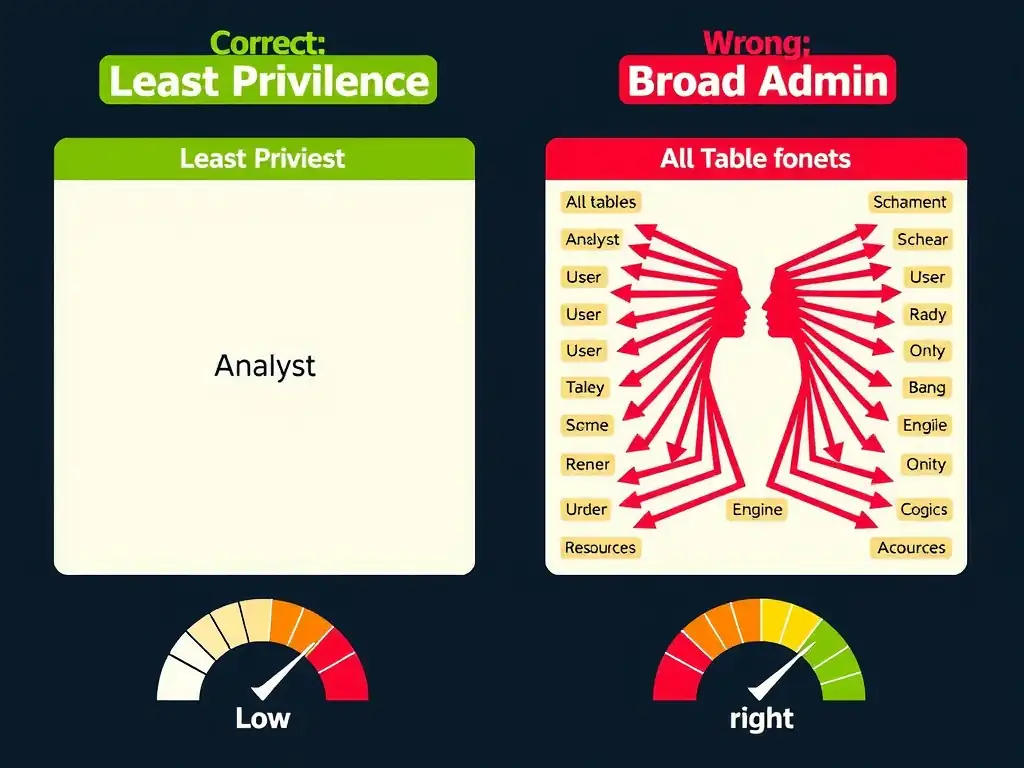
The required governance work is registering the assets with accurate metadata, defining access policies for the intended audiences, and confirming lineage reflects the production pipeline. Production readiness means the assets are registered with metadata consumers can trust, access policies express the intended audiences deliberately rather than by inheritance, and lineage describes the pipeline that now runs so provenance questions can be answered. Granting the whole analytics group read access to every catalog and narrowing it only if anyone complains is wrong because it exposes data first and reacts second, and nobody complains about access they should not have. Copying the proof-of-concept tables to a separate bucket for a stable snapshot is wrong because it creates a second ungoverned dataset that drifts from the source. Leaving permissions as they were in the proof of concept is wrong because those permissions were scoped to a small trusted group and carry no consideration of a wider audience. For the exam, promotion to production is a governance step, not just a scaling step.