
What does registering a data asset in watsonx.data accomplish?
Select an answer to reveal the explanation.
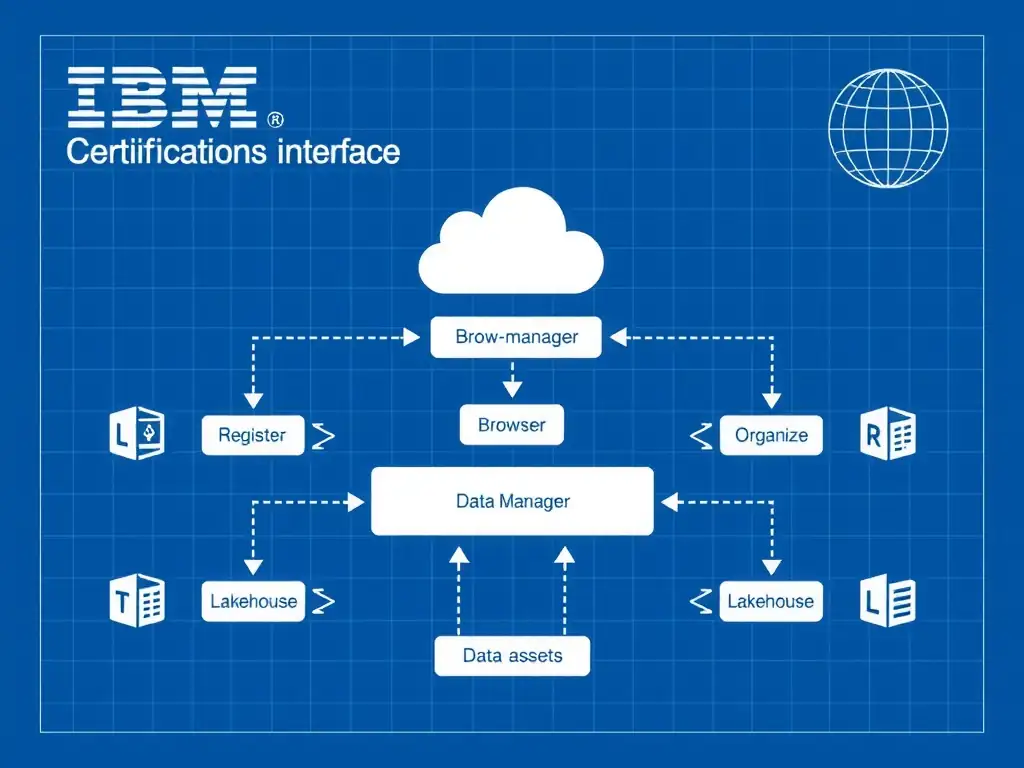
Short Explanation
Registration is a metadata act. You’re not moving files, converting formats, or handing out access; you’re recording the asset in a catalog as a table with a schema so engines can find and query it under governance.
Full Explanation
The correct answer is the one that says registration records the asset in a catalog as a table with a defined schema, making it discoverable, queryable through engines, and subject to governance. Registration creates the catalog entry that defines a table over existing data: its name, schema, and the files that constitute it. That entry is what makes the asset discoverable, resolvable by engines, and attachable to governance policy. The option claiming it copies the underlying data files into a managed storage area controlled by the platform is incorrect because no data is copied. The files stay where they are, which is why registration is fast regardless of table size. The option claiming it grants all platform users read access to the asset by default is incorrect and would be a serious defect. Registration makes an asset governable; entitlement is granted separately through policy. The option claiming it converts the underlying files into a proprietary format optimised for the platform's engines is incorrect because the platform works with open formats deliberately. No conversion to a proprietary representation occurs. For the exam, describe registration as metadata only - no movement, no conversion, no implicit access.