
Which combination correctly describes how lakehouse data on object storage is made usable and safe?
Select an answer to reveal the explanation.
Short Explanation
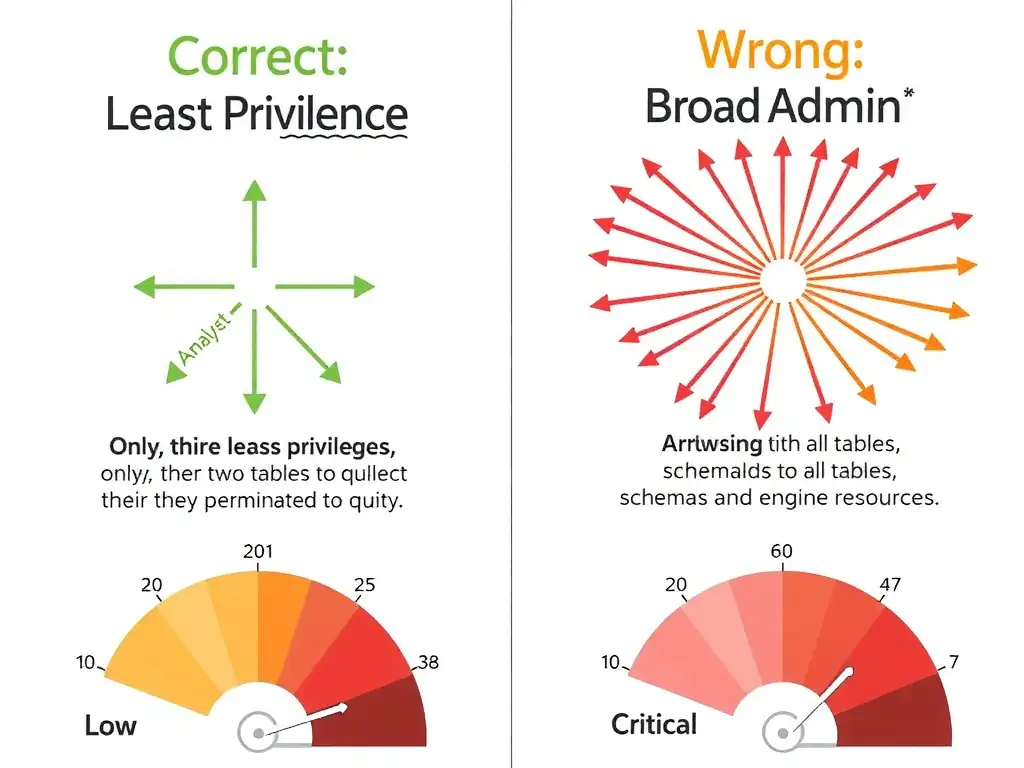
Three layers, three jobs. Object storage keeps the bytes safe and cheap. The catalog makes them a table, and governance decides who gets to query what once, centrally, rather than in whatever tool happens to be connecting.
Full Explanation
The correct combination is the one that says object storage holds the data files, catalog metadata defines the tables over them, and governance policies control who may query what. This is the division of responsibility the platform is built on. Object storage supplies scalable and durable persistence, the catalog supplies the metadata that turns objects into queryable tables, and governance supplies the entitlement model evaluated at query time. The combination that says object storage holds both data and table metadata, and governance is applied by each client tool, is incorrect on both counts. Table metadata lives in the catalog rather than being an intrinsic property of a bucket, and pushing governance into client tools protects only the clients that implement it. The combination that says the catalog holds the data files, object storage holds backups, and engines enforce policy locally, is incorrect because it inverts the storage relationship; object storage is the system of record, not a backup target, and policy enforced independently per engine would drift immediately. The combination that says each engine holds its own metadata and permissions for the objects it reads, is incorrect because per-engine metadata and permissions would reintroduce exactly the silos that shared governed data removes. For the exam, expect at least one question that asks you to assign each of these three responsibilities to the right layer.