
An enterprise already operates a Presto cluster outside watsonx.data and does not want to migrate those workloads. They still want watsonx.data to govern the metadata and expose the same tables. What does Infrastructure Manager let them do?
Select an answer to reveal the explanation.
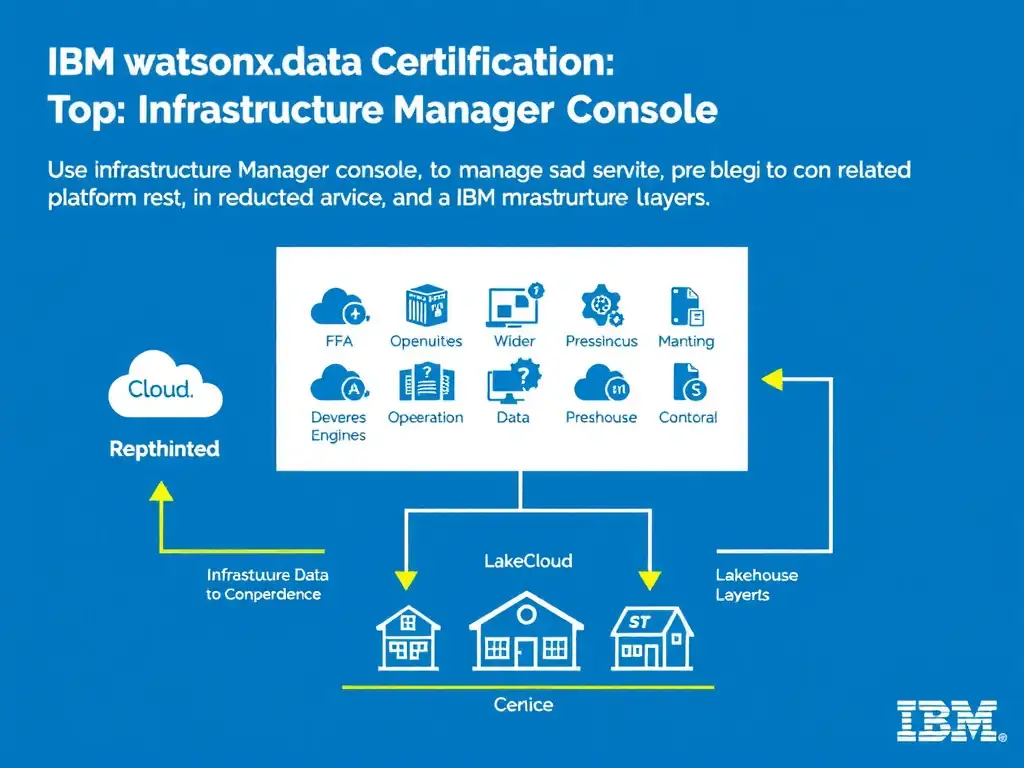
Short Explanation
You don't have to tear down a working Presto cluster to get governed metadata. Infrastructure Manager lets you register that existing deployment as an external engine, so it appears alongside native engines and can be associated with catalogs.
Full Explanation
The right choice is registering the existing Presto deployment as an external engine so it appears alongside native engines. Infrastructure Manager supports both native engines, which watsonx.data provisions and lifecycle-manages, and external engines, which are existing deployments registered with the platform. Registering the external Presto cluster brings it into the same topology, so catalogs can be associated with it and its users query the same governed tables without the workloads moving.
Importing the external cluster's query history is incorrect because query history is a record of what ran, not a control. Ingesting it would produce reporting about past activity while leaving current queries entirely ungoverned.
Saying there is nothing Infrastructure Manager can do is incorrect because it states the opposite of the platform's design. Supporting engines the customer already runs is a deliberate feature of the hybrid model, not an omission.
Replicating the external cluster's data into a watsonx.data bucket and pointing users at the copy is incorrect because it creates a second copy of the data with its own drift and governance surface, which is precisely the outcome the lakehouse architecture exists to avoid. It also does not address the stated requirement, which is that the existing workloads keep running.
For the exam, be able to distinguish a native engine from an external one and know that both can be associated with catalogs.