
A proposal creates a separate data mart for each query engine so that every engine has data laid out optimally for it. What is the objection?
Select an answer to reveal the explanation.
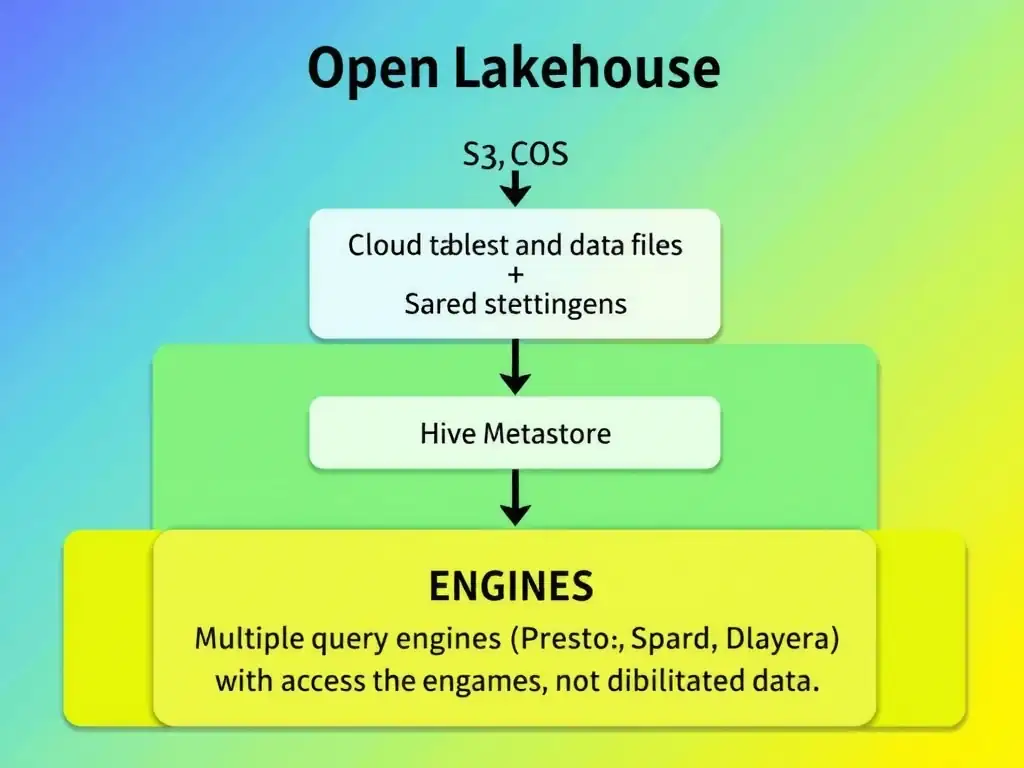
Short Explanation
You don't fix engine performance by building a separate mart for each query engine. You just bring back copies, drift, and duplicated governance. Optimize the shared table instead, using partitioning and compaction to help every engine at once.
Full Explanation
The correct answer is that per-engine data marts reintroduce copies, drift, and duplicated governance — the problems shared open tables exist to remove. Open table formats on object storage let engines share one governed copy. Building a mart per engine restores per-engine silos: copies diverge, each needs its own access policies, and pipelines must keep them synchronised forever. Layout optimisation belongs on the shared table through partitioning and compaction, which benefits every engine reading it.
The claim that engines cannot read data written by other engines, so the marts would be unusable, is incorrect because interoperability is the defining property of an open format. Engines read each other's tables routinely.
The claim that object storage cannot hold more than one copy of a dataset is incorrect as a factual claim about object storage capacity.
The claim that this is a sound approach and the recommended pattern for multi-engine deployments is incorrect and states the anti-pattern directly. The recommended multi-engine pattern is shared governed data with per-workload compute.
For the exam, treat a copy per engine as wrong on sight in lakehouse questions.