
A department has been emailing spreadsheet extracts of lakehouse tables to its stakeholders because it finds that easier than granting platform access. A governance review flags the practice. What is the core problem?
Select an answer to reveal the explanation.
Short Explanation
The moment a table becomes an attachment it stops being governed. You can't revoke it, trace who has it, or keep it fresh. The source staying governed doesn't matter—the copies are the exposure, and they multiply.
Full Explanation
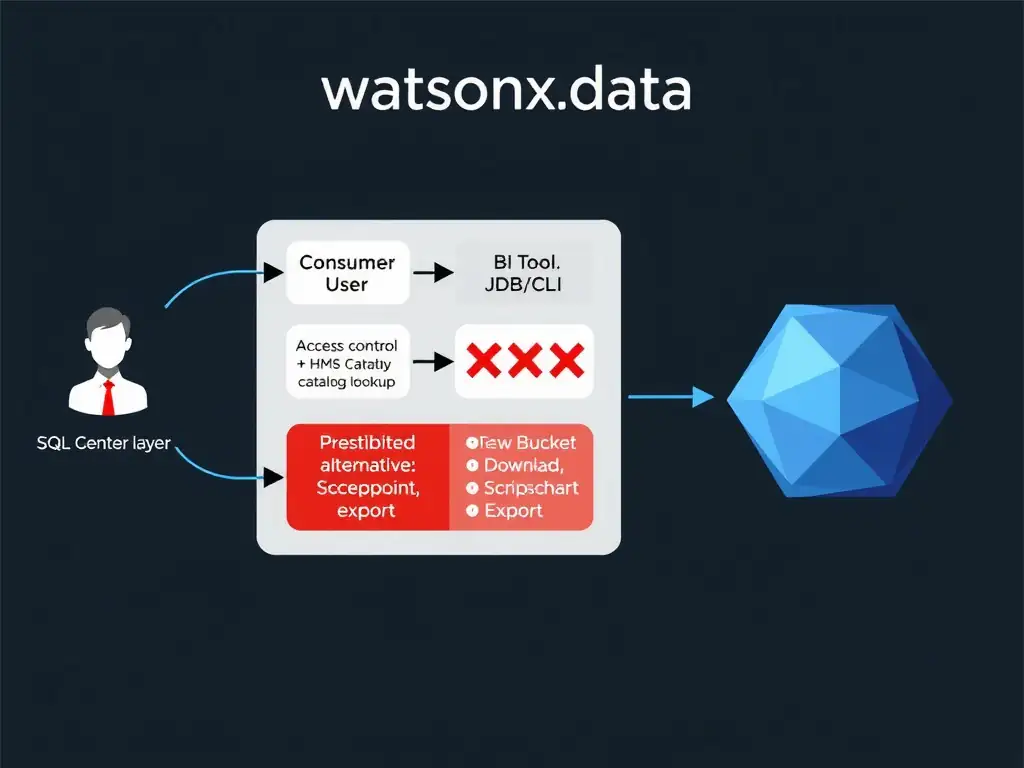
The correct answer is the extract-leaves-platform option. Governance in a lakehouse is enforced at the point of access: the catalog defines the table, policies decide who may read it, and lineage records where it came from. An extract that leaves the platform carries none of that. It cannot be revoked when someone changes role, it does not appear in any audit of who has the data, and it is stale from the moment it is sent.
The spreadsheet-data-type option is incorrect because it identifies a real but minor fidelity concern rather than the governance failure. Type coercion is a nuisance; uncontrolled distribution of governed data is a compliance exposure.
The object-storage-capacity option is incorrect because it misplaces the cost. Attachments live in the mail system, not in the platform's buckets, and storage was never the issue.
The no-problem-if-source-governed option is incorrect because it treats governance as a property of the source table alone. Controls that can be trivially sidestepped by exporting are not controls, and the review is right to flag it.
For the exam, connect governed consumption to querying through supported interfaces rather than to distributing copies.