
Why is keeping all historical data on the fastest available storage tier a poor default?
Select an answer to reveal the explanation.
Short Explanation
You're paying for speed on data nobody asks for. It isn't technically wrong—it's just an expensive habit that grows every year the history does.
Full Explanation
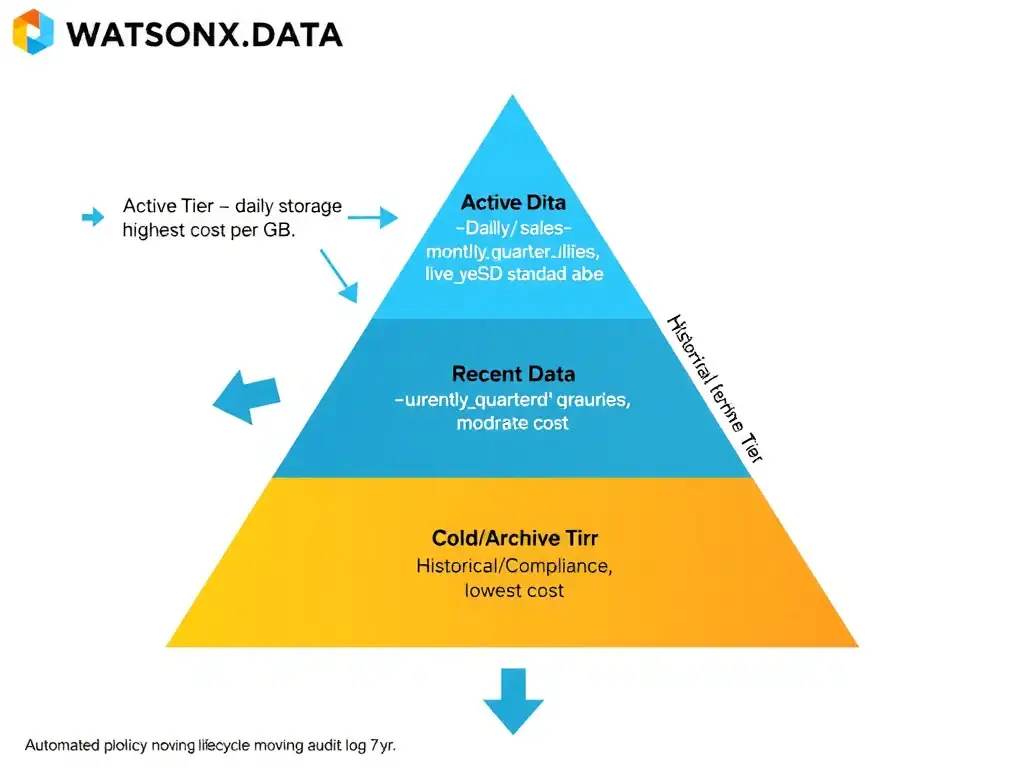
The correct answer is the one that says it pays a premium rate for data that is rarely read, without producing a benefit anyone experiences. Performance tiers cost more per unit stored. Data that is queried a few times a year gains nothing from that spend, so the premium is pure waste—and it compounds as history accumulates. The option claiming fast tiers impose a hard limit on how much historical data they can hold is incorrect because there is no such capacity ceiling; cost, not capacity, is the constraint. The option claiming query engines cannot read historical data from a performance tier is incorrect because engines read data from any tier the platform supports. The option claiming table formats require historical partitions to be on archival storage is incorrect because table formats impose no placement requirement on older partitions. For the exam, the objection to a single fast tier is cost without corresponding benefit, and the answer is tiering by access pattern.