
A team decides not to register newly landed data in the catalog, reasoning that leaving it unregistered keeps it flexible until the schema settles. What is the consequence?
Select an answer to reveal the explanation.
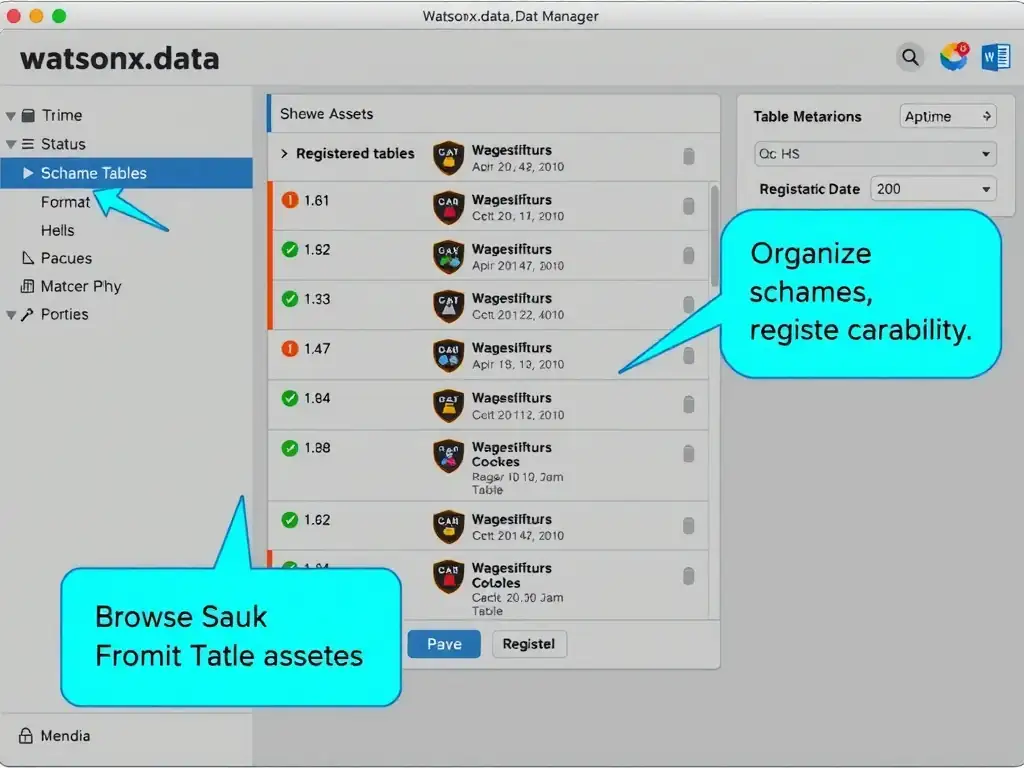
Short Explanation
Unregistered data is just objects in a bucket. You can't find it, query it as a table, or govern it. Register it now and use schema evolution later if the schema changes.
Full Explanation
The answer saying that unregistered data isn't discoverable or queryable as a table, so it can't be governed or used through engines, is correct. Registration is what makes data a table. Until it happens there is nothing for an engine to resolve, nothing for governance to attach policy to, and nothing for an analyst to discover. The flexibility argument is also unnecessary, since open table formats support schema evolution after registration.
The answer saying the data remains queryable but loses transactional guarantees until registered is incorrect because transactional guarantees come from the table format and its metadata, which is exactly what registration brings into play.
The answer saying the data is automatically registered on first access, so there is no consequence, is incorrect because there is no automatic registration on access. An engine cannot access what it cannot resolve.
The answer saying the data is discoverable but read-only until an administrator confirms the schema is incorrect because unregistered data isn't discoverable at all, and there is no confirm-the-schema gate of that kind.
For the exam, the distractor pattern avoid registration so data remains flexible or discoverable is self-contradictory and always wrong.