
A team lists the components involved when an analyst runs a query in watsonx.data. Which sequence reflects how the platform actually satisfies the request?
Select an answer to reveal the explanation.
Short Explanation
Follow the request: the engine takes the SQL, the catalog tells it which files make up that table, the bucket supplies the bytes, and policy decides what you're allowed to get back. Each component does one job, and knowing which job is which is what you need to nail.
Full Explanation
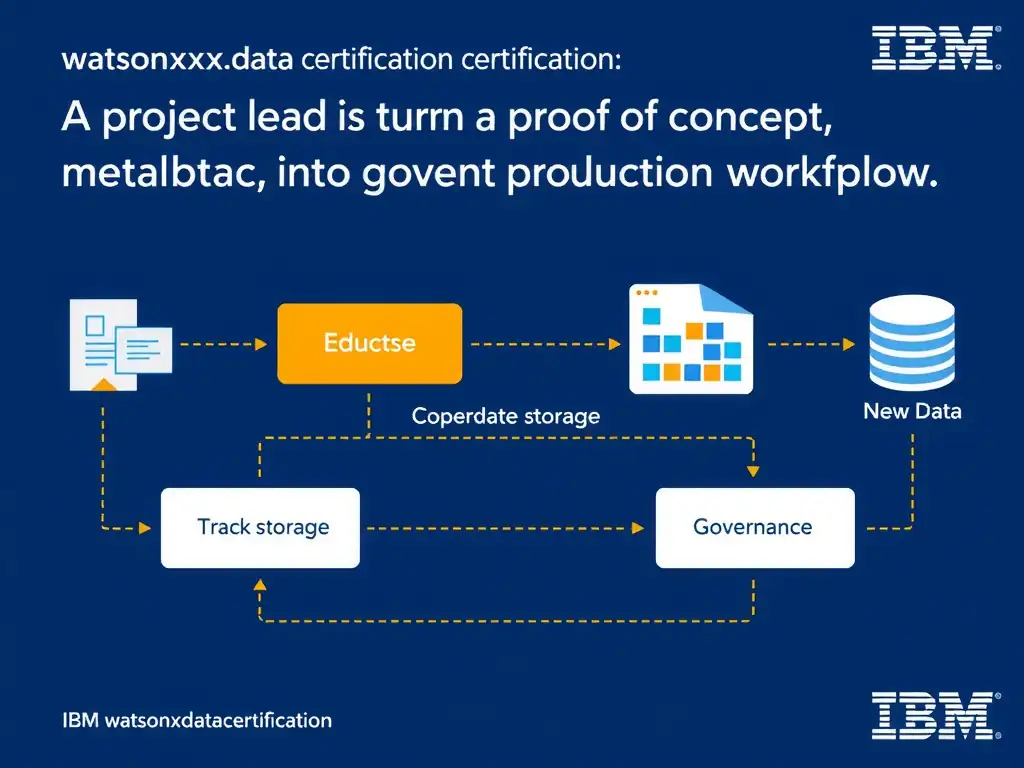
The correct choice is the one that says the engine resolves the table through the catalog, the catalog points at files in the bucket, and governance policies are applied to the request. Query execution is a collaboration between distinct components. The engine parses and plans the SQL; the catalog supplies the table's schema and the set of data files that constitute its current state; object storage serves those files; and governance policies are evaluated against the requesting identity so the result reflects what that user may see.
The choice that says the catalog executes the query directly and returns rows from its own metadata store is incorrect because a catalog holds metadata, not data. It describes tables; it has no execution engine and no rows to return.
The choice that says the bucket returns the requested rows to the engine, which then registers them in the catalog, is incorrect because it inverts the roles. Object storage serves objects when asked and has no notion of rows or tables, and catalog registration is an administrative act, not something that happens per query.
The choice that says governance rewrites the query into a storage API call that runs without an engine is incorrect because governance is an enforcement layer applied to requests, not a query processor. Removing the engine from the path would leave nothing capable of planning or executing SQL.
For the exam, be able to attribute each responsibility to the right component - that mapping is what most fundamentals questions are really asking.