
An organisation runs both interactive BI queries and long-running batch transformations against the same lakehouse tables. What is the recommended design?
Select an answer to reveal the explanation.
Short Explanation
Separate the compute and share the data. That's the lakehouse trade in one sentence, and it's what lets you keep a heavy batch job from ruining someone's dashboard.
Full Explanation
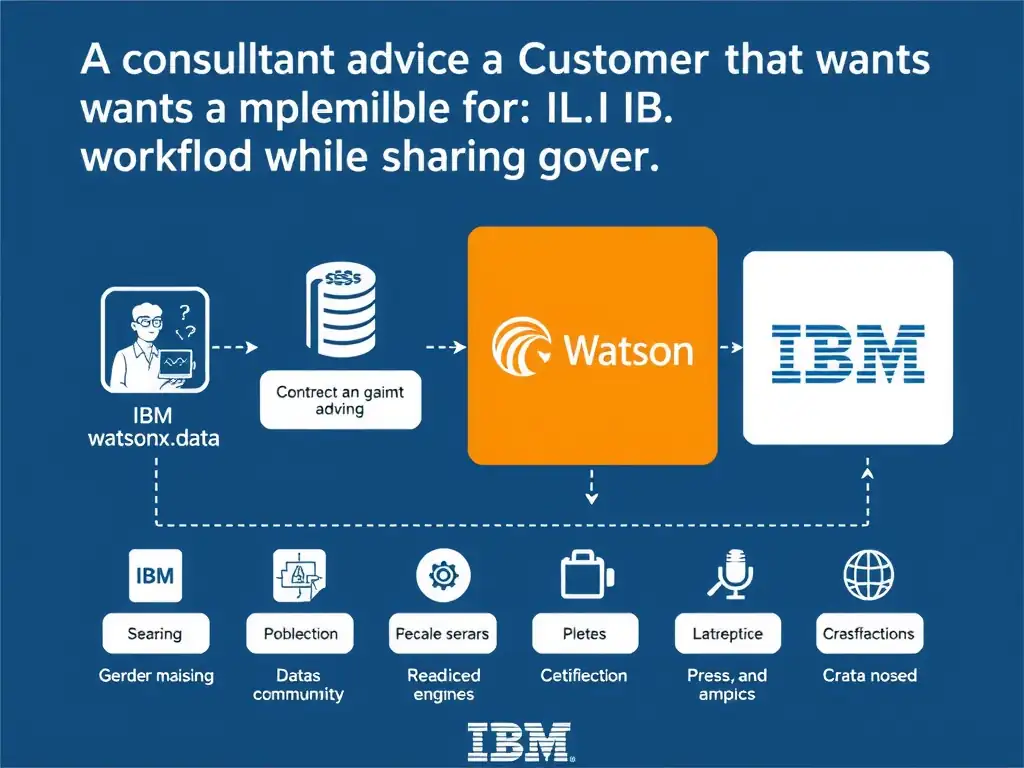
The correct answer is the design that provisions engines suited to each workload and points both at the same governed data, so the workloads are isolated without duplicating the data. Engines are the unit of isolation; the data is shared. Provisioning one engine sized for interactive latency and another for batch throughput separates the workloads' resource contention while both read the same governed tables.
The option that creates a separate copy of the tables for each workload is incorrect because per-workload copies reintroduce exactly what the lakehouse removes: storage cost, synchronisation pipelines, drift, and duplicated governance.
The option that runs both workloads on a single engine and accepts the contention is incorrect because a shared engine lets a heavy batch job degrade interactive response - the problem the design should solve.
The option that moves the batch workload outside the lakehouse and re-imports the results is incorrect because exporting work outside and re-importing results adds latency, cost and a governance gap for no benefit.
For the exam, isolate at the engine and share at the data.