
A team writing directly to object storage relies on file naming - a _final suffix - to signal that a batch is complete. What does an open table format provide instead?
Select an answer to reveal the explanation.
Short Explanation
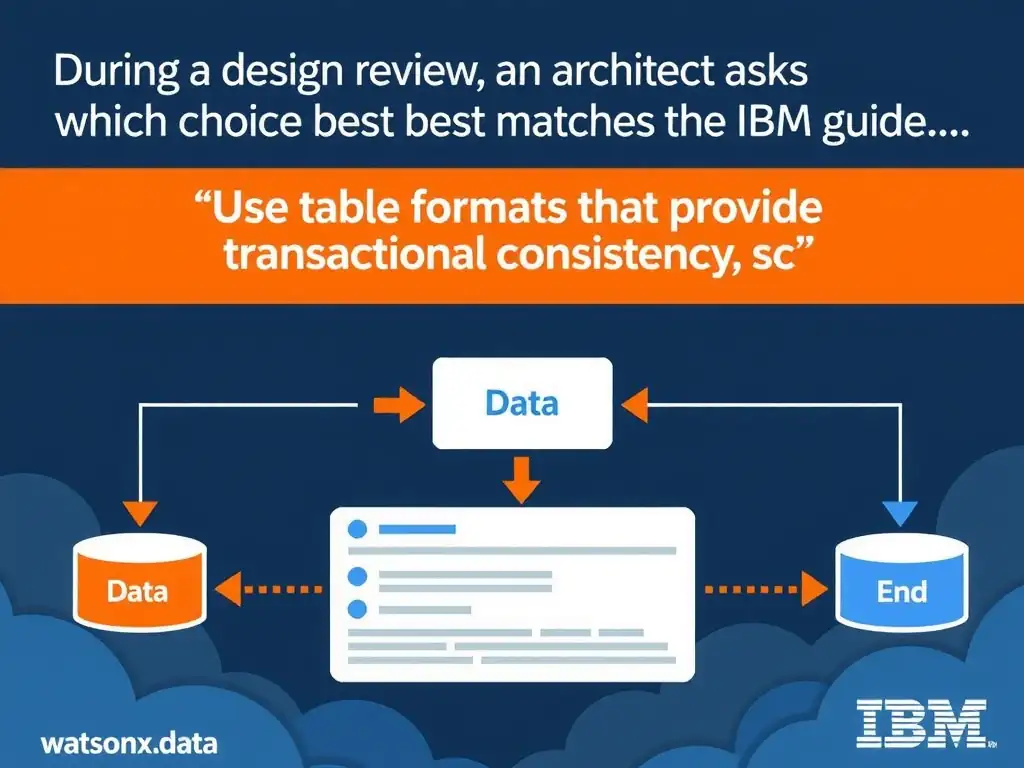
A filename is just a convention; a commit is a guarantee. With an open table format, you update table metadata atomically, so readers see the old snapshot until the batch commits, then the whole new batch at once.
Full Explanation
Open table formats provide atomic commits through table metadata, so a batch becomes visible to readers only when the commit succeeds. They maintain metadata that defines which files constitute the current table state. A write commits by atomically updating that metadata, so readers see either the previous complete state or the new one, never a partial batch.
The faster file rename option is incorrect because the problem is not rename speed. Naming conventions fail because nothing enforces them and readers must be trusted to interpret them correctly.
The locking mechanism that prevents readers from listing the bucket during a write is incorrect because table formats do not block readers during writes; readers continue against the current snapshot, which is the point.
The automatic deletion of files that do not carry an approved suffix is incorrect because no such suffix-based cleanup exists, and file naming carries no meaning to the format.
For the exam, transactional visibility comes from metadata commits, never from filename conventions.