
A team has loaded a set of Iceberg tables into a bucket but analysts cannot find them in watsonx.data. Which interface is used to browse and register lakehouse data assets so they become discoverable?
Select an answer to reveal the explanation.
Short Explanation
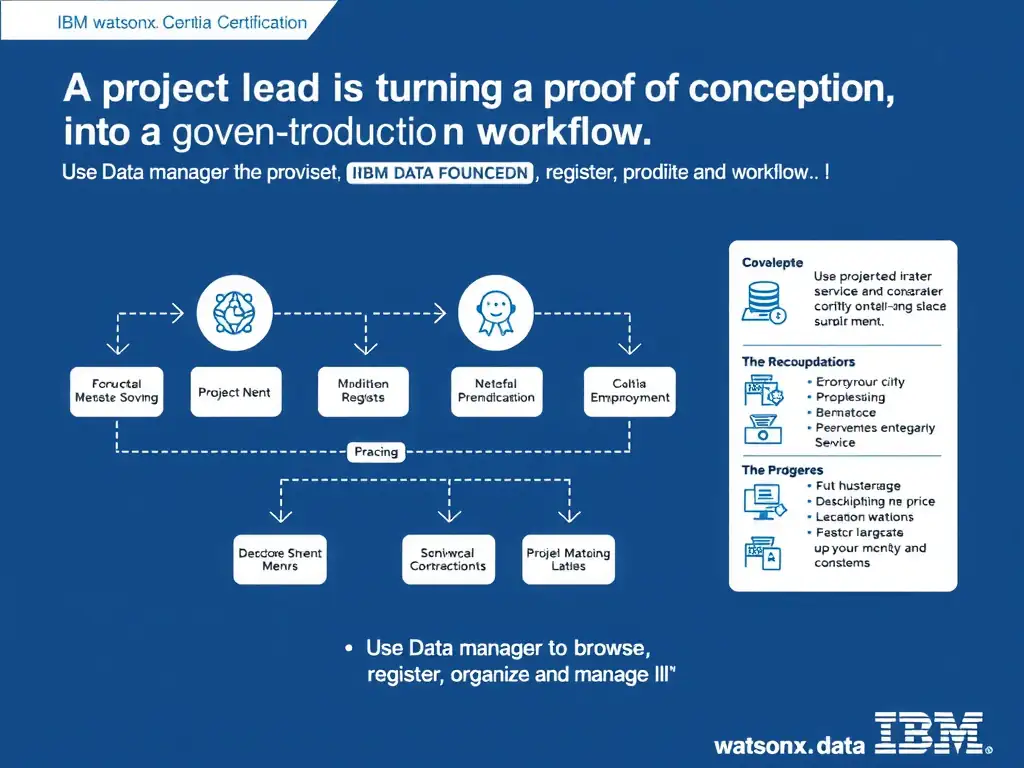
Data manager is where you browse buckets and catalogs and register lakehouse data assets as tables. Infrastructure Manager handles engines and services, so mixing them up wastes time.
Full Explanation
The correct answer is Data manager, which is used to browse buckets and catalogs and register data assets as tables. It lets you browse buckets and catalogs, inspect schemas and tables, and register data so it is discoverable and queryable through associated engines.
The option describing Infrastructure Manager, which registers tables as part of engine provisioning, is incorrect because Infrastructure Manager manages engines, services and their associations. Provisioning an engine does not register any table.
The option describing Query history, which indexes tables as they are first queried, is incorrect because query history records executions after the fact. It is a review and troubleshooting tool and plays no part in making data discoverable.
The option describing the access control screens, which expose tables once permissions are granted, is incorrect because access control determines who may use an asset that already exists. Granting permission on an unregistered table is not possible.
For the exam, hold the split firmly: Data manager for data assets, Infrastructure Manager for compute and services.