
Which statement best summarises how to plan an Instana deployment around use cases?
Select an answer to reveal the explanation.
Short Explanation
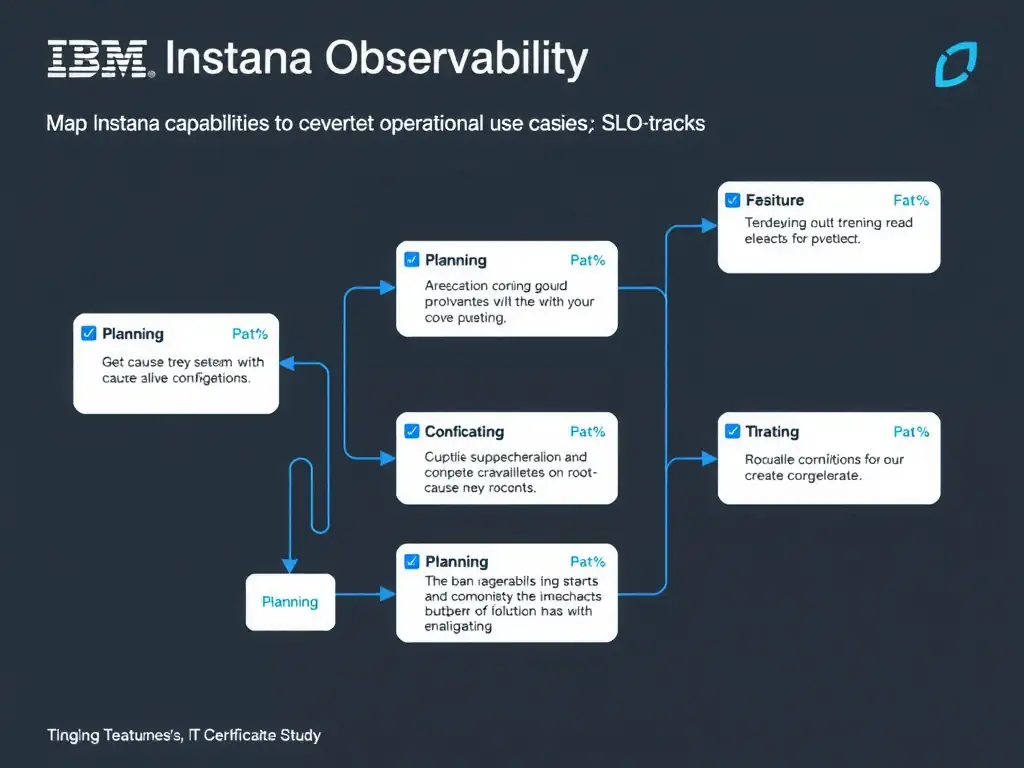
You start with the operational questions each team needs answered, map tracing, alerting, and service metrics to them, and let that mapping decide your rollout order. That gives the deployment direction and a reason for teams to use it.
Full Explanation
The correct answer is to identify the operational questions each team needs answered, map tracing, alerting and service metrics onto them, and use that mapping to prioritise the rollout. Explicit mapping gives the rollout a priority order and gives each team a reason to use the platform, because it answers a question they already had. Deploying first, collecting broadly, and letting use cases emerge is wrong because emergent use cases leave the deployment without direction or a measure of success. Defining one standard set of telemetry needs and applying it uniformly is wrong because teams differ in what they need to see. Establishing dashboard styling standards first is wrong because styling is a late, minor concern. For the exam, present use-case mapping as the planning step that drives everything else.