
Which statement best summarises the correct use of maintenance windows?
Select an answer to reveal the explanation.
Short Explanation
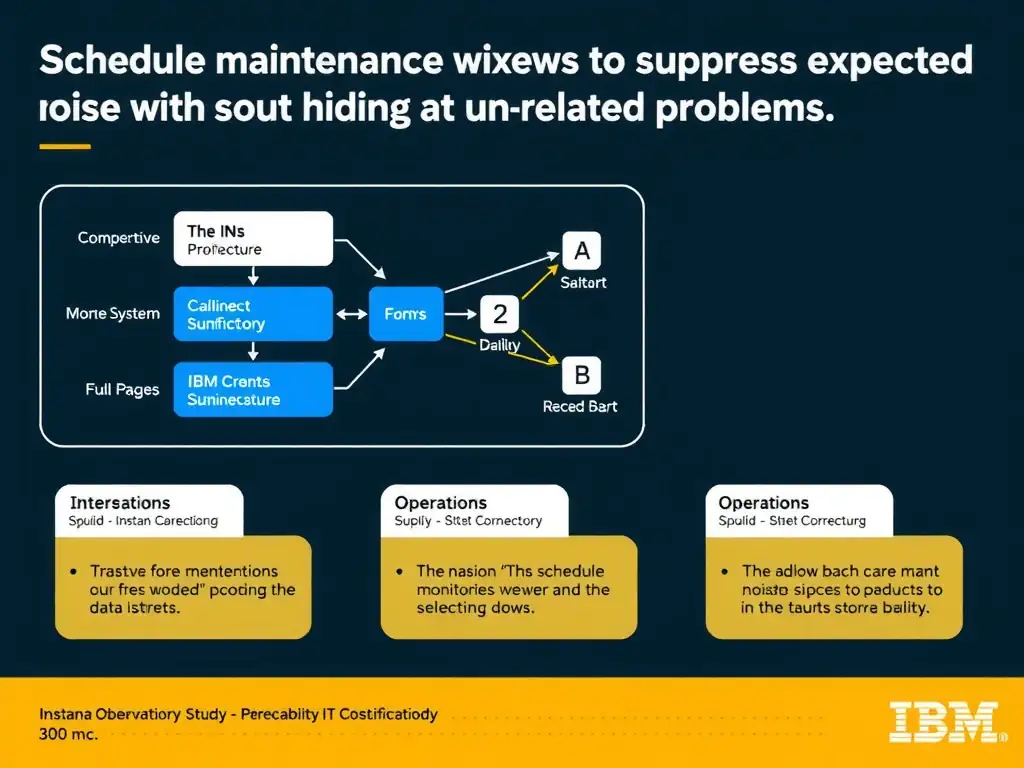
Schedule maintenance windows only around the entities and time period a planned change affects. That suppresses expected alerts while everything else keeps alerting.
Full Explanation
The correct statement is the one that says to schedule maintenance windows over the entities and time period a planned change affects, so expected alerts are suppressed while everything else continues to be watched. The value lies in suppressing exactly the noise a known change will produce while preserving monitoring coverage everywhere else.
The permanent-suppression option is wrong because a service that alerts too often has a threshold or design problem, and permanent suppression hides the symptom rather than fixing it.
The option limiting maintenance windows to changes lasting more than a day is wrong because a maintenance window is preferable to deleting rules regardless of duration; the deletion risk does not depend on length.
The after-the-fact documentation option is wrong because maintenance windows are configured before a change rather than used as after-the-fact documentation.
For the exam, be able to state both what a maintenance window suppresses and what it deliberately leaves alerting.