
What distinguishes a properly scoped maintenance window from blanket suppression?
Select an answer to reveal the explanation.
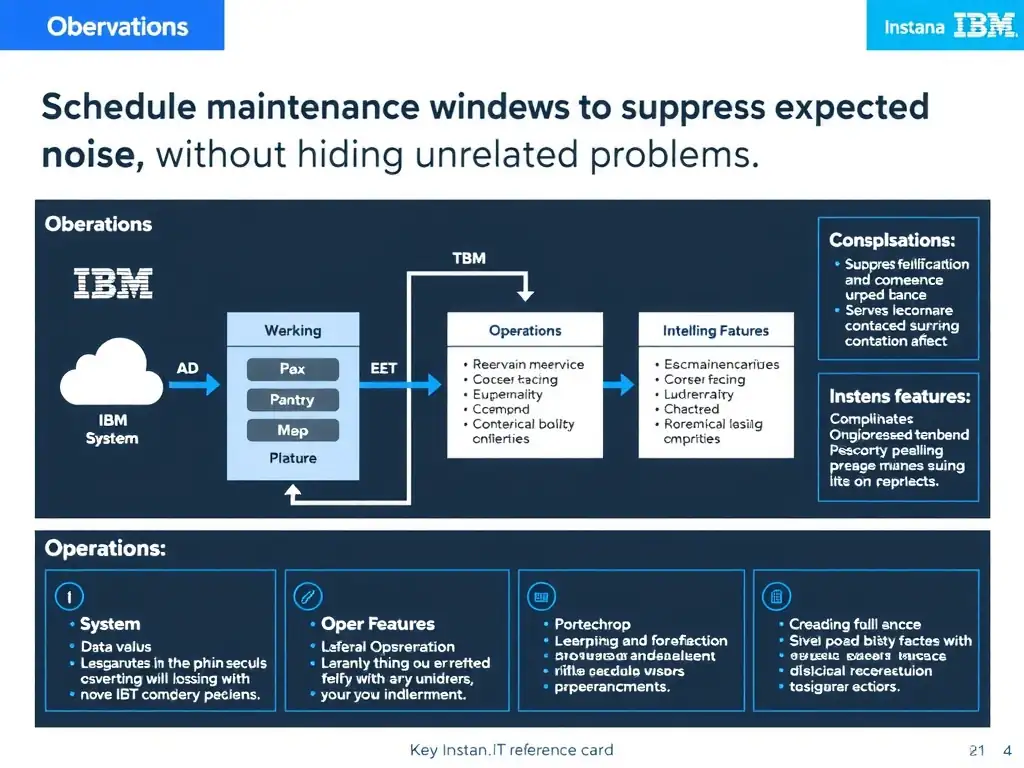
Short Explanation
A proper maintenance window is bounded in what and bounded in when. Those two bounds keep the rest of the system still watched, so you don't lose visibility outside the change.
Full Explanation
The correct answer is the one that says a properly scoped maintenance window applies to defined entities for a defined period, so problems outside that scope or after that period still generate alerts. Scope and duration make it safe: anything outside either boundary continues to alert, so an unrelated failure during the change is still noticed. The answer that says it disables telemetry collection is incorrect because collection continues; data remains available for later analysis and only notification is suppressed. The answer that says it converts alerts into incident reports is incorrect because incident reporting is a separate function. The answer that says it applies to all entities but only low severity alerts is incorrect because filtering is by scope and time, not severity. For the exam, define a maintenance window by its two boundaries.