
A planned deployment will briefly restart services and generate alerts nobody needs to act on. What is the correct way to handle this?
Select an answer to reveal the explanation.
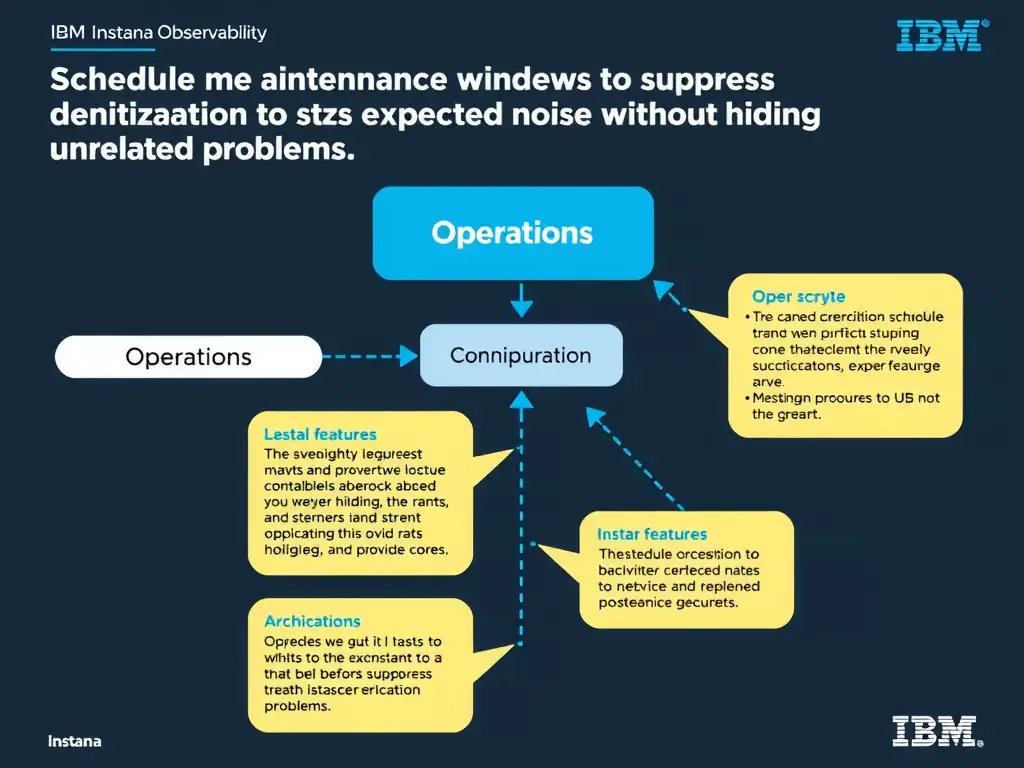
Short Explanation
You need a maintenance window because it's scoped and time-bound. It mutes expected alerts while unrelated problems still alert normally. Don't delete rules; they can stay deleted.
Full Explanation
The correct approach is scheduling a maintenance window covering the affected scope and time period. Maintenance windows exist for expected disruption. Defining scope and time suppresses the noise the change will cause while leaving everything outside that scope alerting normally.
Deleting the relevant alert rules before the change and recreating them afterwards is incorrect because deleted rules must be recreated by hand, and the step that restores them is easily forgotten, leaving the service unmonitored indefinitely.
Suppressing all monitoring indefinitely so no notifications can be generated is incorrect because blanket indefinite suppression hides genuine failures alongside expected ones, and nothing prompts anyone to turn it back on.
Recording the change as an incident report so responders know why alerts fired is incorrect because an incident report documents what happened after the fact; it does nothing to prevent the notifications.
For the exam, connect maintenance windows to planned, scoped, time-bound suppression.