
A team wants alerting that responders will act on rather than ignore. How should Smart Alerts be configured?
Select an answer to reveal the explanation.
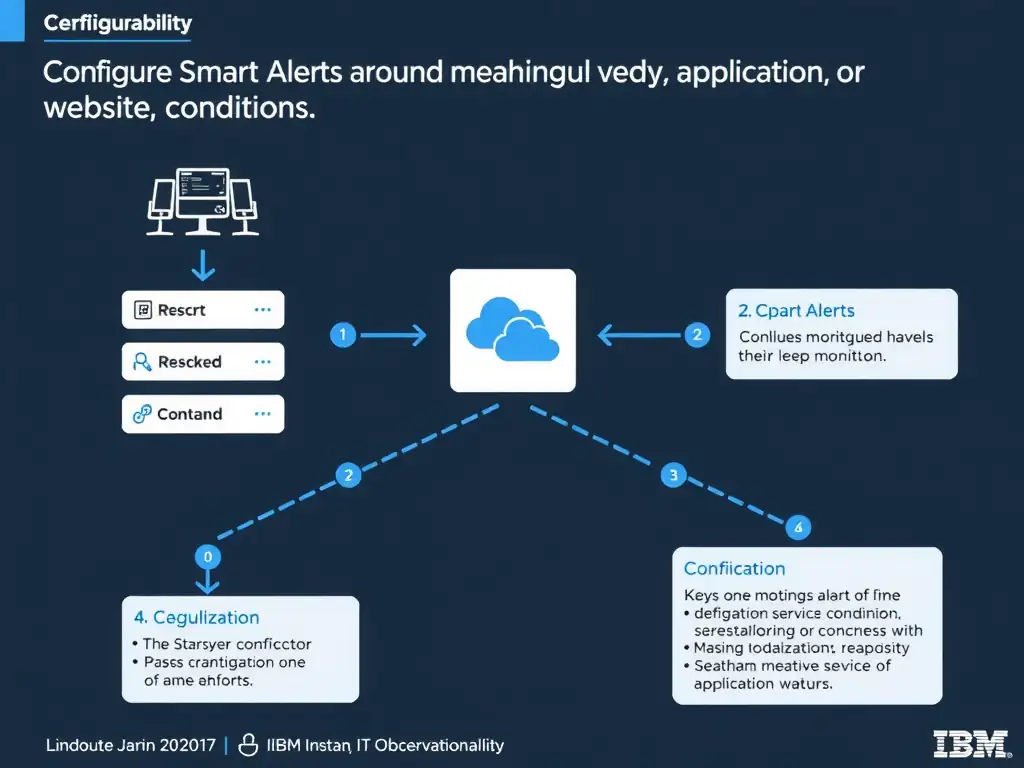
Short Explanation
You want alerts that people actually act on, so configure Smart Alerts around real service, application, or website impact and send them to the team that can fix it. If an alert doesn't describe impact or reach a responder, it's just noise.
Full Explanation
Smart Alerts should be configured around meaningful service, application, or website conditions that represent real impact, with a defined notification path to the responsible team. This works because an alert earns its place by describing impact and reaching someone who can act. The option that fires on every individual trace is wrong because it produces a volume no one can triage, and the practical outcome is that all alerts get ignored. The option that treats alerts as detection rules only, leaving notification channels to be added if anyone asks, is wrong because an alert with no notification path fires into an interface nobody is watching, which is functionally the same as not alerting at all. The option that uses static thresholds copied from another environment and left unchanged is wrong because thresholds borrowed from a different environment do not reflect this one's normal behaviour, and unreviewed thresholds drift further out of date as the system changes. For the exam, judge an alert by whether it signals real impact and whether it reaches a responder.