
A customer building out a scalable implementation asks which task in the boundary-validation process suits reviewing candidate transaction scopes. What is the answer?
Select an answer to reveal the explanation.
Short Explanation
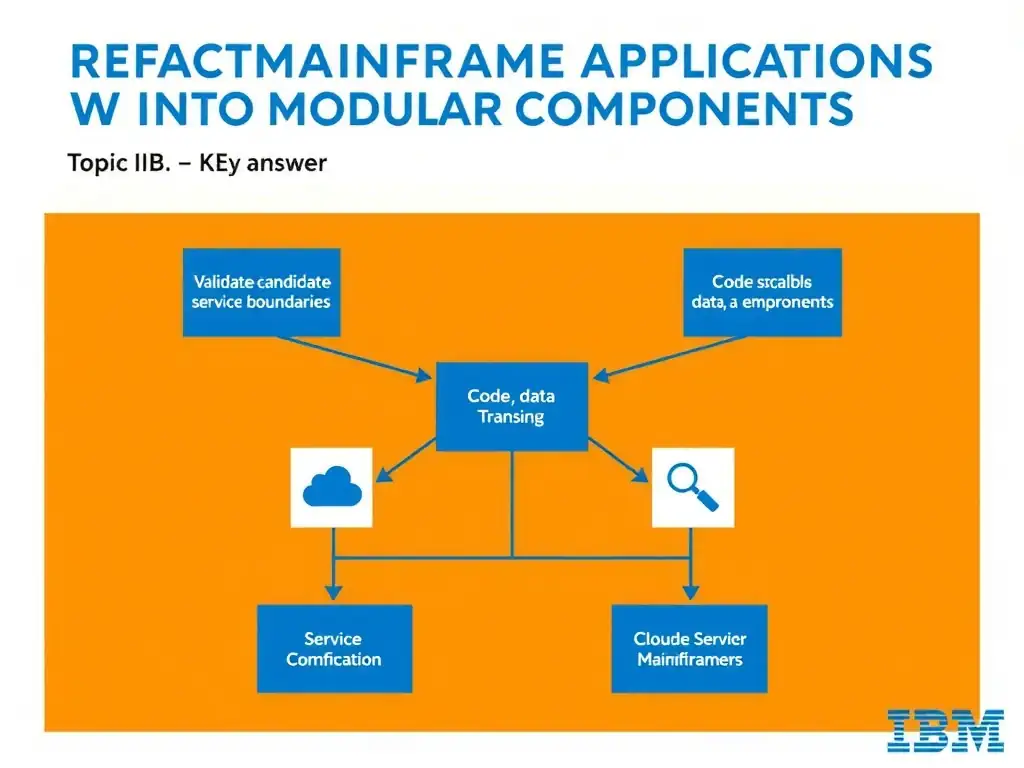
You trace each candidate business operation through the code and see where it crosses a proposed service boundary. If it needs coordinated commits across more than one service, the scope isn't clean. That's the boundary-validation task.
Full Explanation
The correct answer is the option that says to trace each candidate business operation through the code to confirm it does not require coordinated commits across more than one proposed service. Transaction scope is verified by walking the operation through the candidate boundaries and checking whether it needs to commit across more than one, which is a code and data question rather than a usage or preference question.
Counting the number of screens the customer's users interact with per day is incorrect because screen usage speaks to user behaviour, not transactional scope.
Measuring how many lines of code sit inside each candidate service is incorrect because line count says nothing about whether a transaction is preserved intact.
Surveying developers for their personal preference on service size is incorrect because developer preference is not evidence of correctness.
For the exam, validate transaction scope by tracing operations through the code, not by proxy metrics.