
The review team keeps hearing the assumption that every transformed workload must move off IBM Z as a matter of course. What is the flaw in that assumption?
Select an answer to reveal the explanation.
Short Explanation
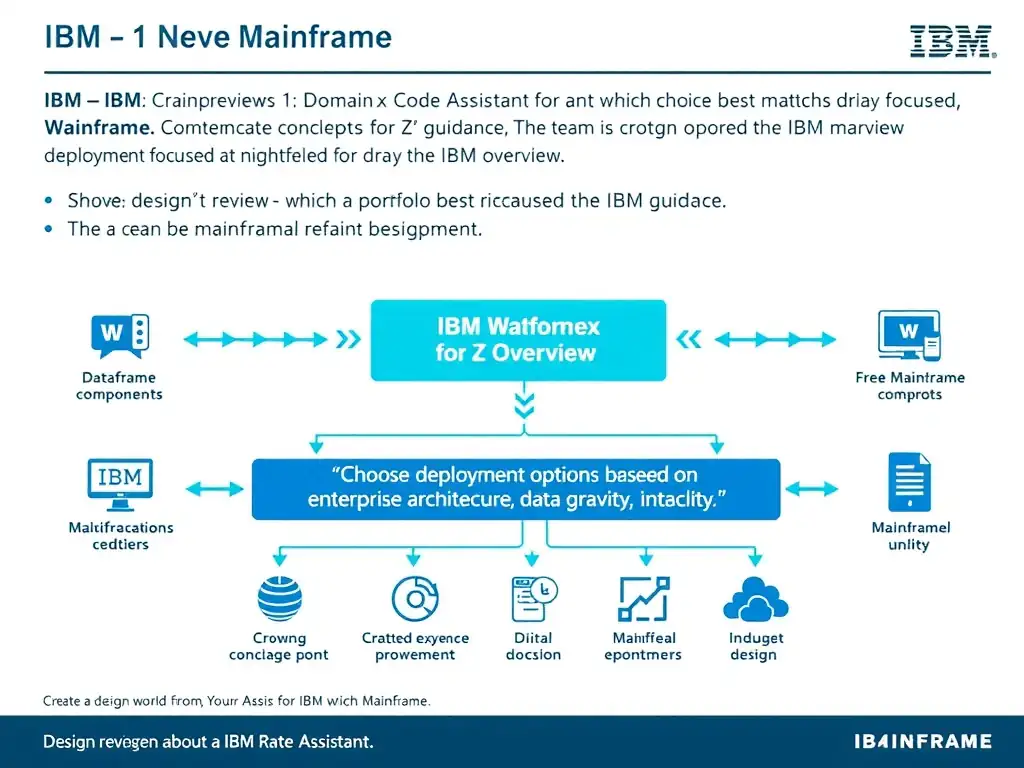
Data has weight. Moving the workload away from where its data lives can cost more than it saves. You should keep the workload close to its data, or go hybrid, when that makes more sense.
Full Explanation
The correct answer is the choice that points to data gravity: large, tightly coupled datasets pull associated processing toward them, and separating a workload from its data can introduce latency, cost, and integration complexity that outweigh the benefit of moving. That makes keeping the workload close to its data, or using a hybrid design, the better architectural choice in many cases. The choice claiming every transformed workload should always leave IBM Z as a matter of policy is incorrect because there is no such blanket policy; deployment options are chosen per workload against real requirements. The choice saying data gravity only matters for workloads that process large batch jobs is incorrect because data gravity applies broadly, not only to batch processing. The choice saying the assumption is fine as long as the demo environment showed acceptable performance is incorrect because demo performance does not capture production data gravity, integration, or governance constraints. For the exam, treat 'everything must leave IBM Z' as the wrong-idea to rule out.