
Ahead of a production rollout, the question is when to consult the application blueprint. When should it be used?
Select an answer to reveal the explanation.
Short Explanation
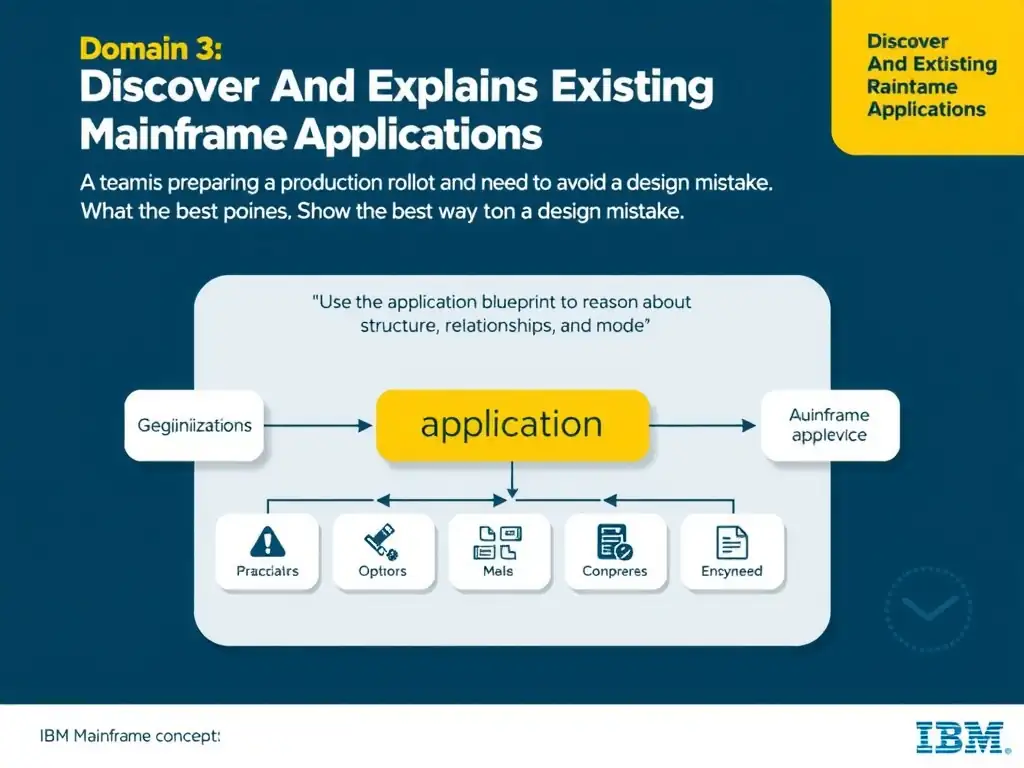
Consult the blueprint while you can still change the plan, not after deployment as a historical record. Use it throughout discovery and planning so structure and relationships inform decisions while there is still time to act on them.
Full Explanation
The correct answer is the choice that says the blueprint should be consulted throughout discovery and planning, before deployment, so structure and relationships inform decisions while there is still time to act on them. The blueprint earns its value by shaping scoping, sequencing and risk decisions during discovery and planning, when the findings can still change the approach. Using the blueprint only after deployment, as a record of what was shipped, is incorrect because it turns it into documentation rather than a planning tool, missing the point at which it could have prevented a poor decision. Consulting it only once, at the very start of the engagement, and never referring to it again is incorrect because an application's understood structure evolves as discovery proceeds, so a single early look misses later refinements. Using it only when a defect is reported in production and a root cause is needed is incorrect because limiting its use to incident response is far narrower than its intended role in planning modernisation work. For the exam, the blueprint is a planning-phase tool used continuously, not a one-off or after-the-fact artefact.