
Which default TCP port does the ADDI Server use for HTTPS connections from the Analysis Server and web console?
Select an answer to reveal the explanation.
Short Explanation
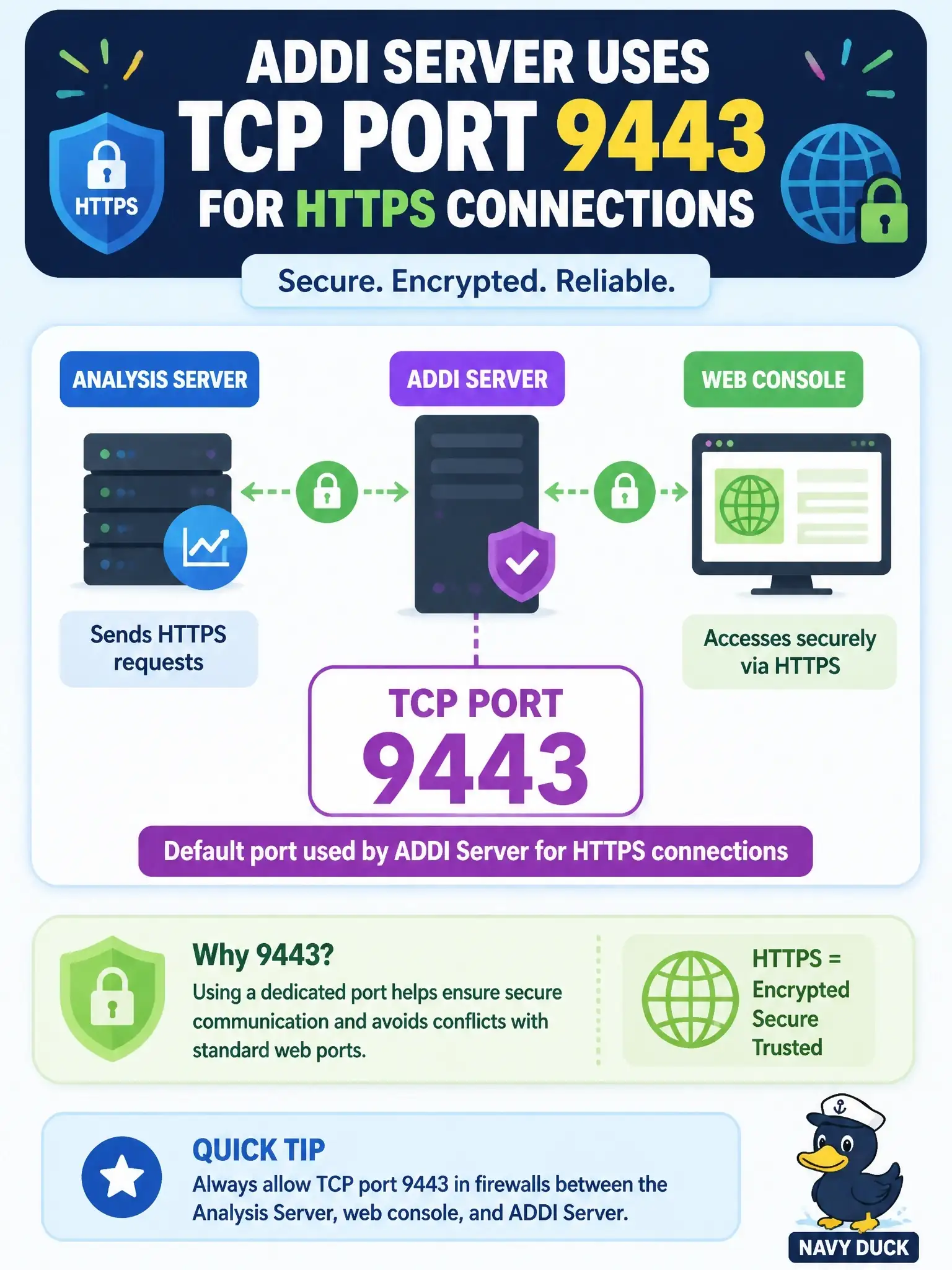
Here's the easy memory hook: 9443 is the classic secure web port in the IBM world, and ADDI sticks with it. The AD Configuration Server's web interface listens on 9443 by default, and you can change it at install time if something else already owns it.
Full Explanation
IBM Application Discovery and Delivery Intelligence publishes a TCP port and firewall table, and it lists 9443 as the default port used to access the web interface of the IBM AD Configuration Server, with the note that it can be customized. The same 9443 value appears as the SSL port for the AD Audit Service when SSL is enabled, which reinforces 9443 as the HTTPS convention across the suite. Port 8080 does not appear in the ADDI port table at all; it is a common plain-HTTP default for other application servers, so choosing it confuses a generic web convention with the documented ADDI value. Port 1433 is listed, but it belongs to the SQL Server Database Engine instance hosting the AD databases, not to HTTPS traffic from the web console. Port 3000 is typical of development web servers and has no role in the ADDI topology. On the exam, remember that ADDI publishes several service ports, such as 2181 for configuration requests, 9080 for the Audit and Catalog services and 7600 for the DEX authentication server, but 9443 is the secure web one. As an operational check, verify with netstat or the server configuration that 9443 is listening on the ADDI host and open that port through any firewall between client machines and the server.