
Which metric indicates how often users escalate to a human agent during conversations?
Select an answer to reveal the explanation.
Short Explanation
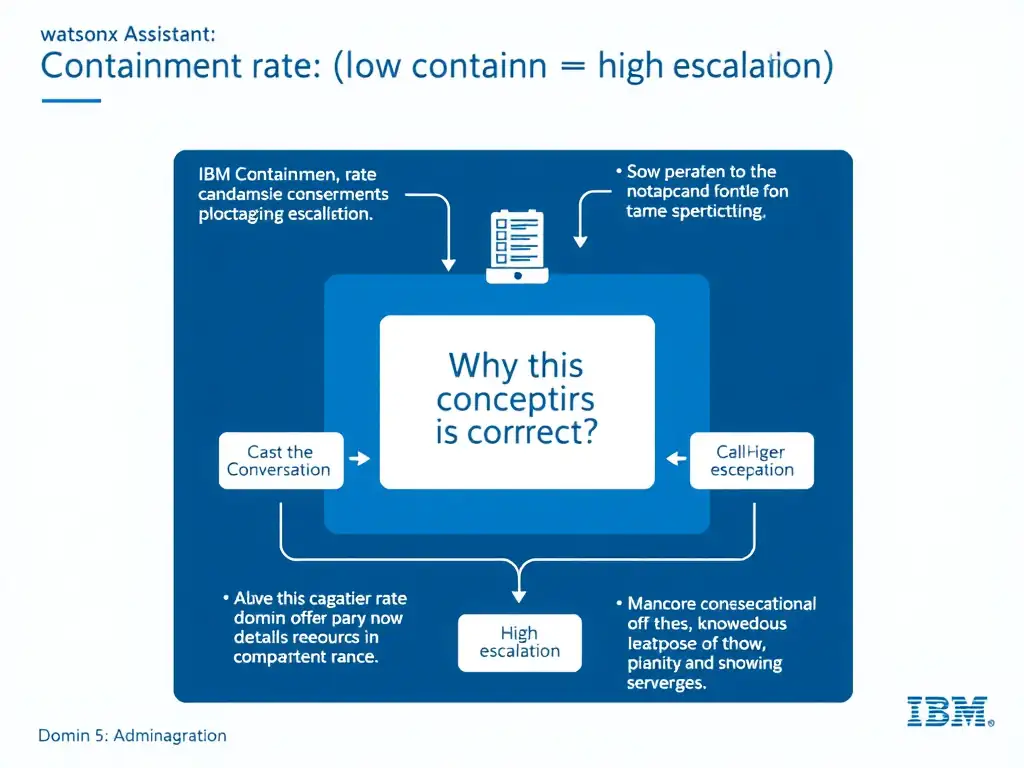
Containment is the flip side of escalation, like counting how many callers a help desk solves without transferring. It counts conversations the assistant handles without human intervention, so when containment drops, more of your users are ending up with a human agent.
Full Explanation
The watsonx Assistant analytics overview defines containment as the number of conversations in which the assistant satisfies the customer's request without human intervention, and its trend graph shows the percentage of daily conversations contained. Because every conversation is either contained or handed to a person, containment is the metric that reveals how often users escalate: a falling containment percentage means a rising share of conversations reaching a human agent. Recognition rate is wrong because recognizing an intent says nothing about whether the conversation later needed a person; weak understanding is the related measure for that. Coverage is wrong because it measures how many user messages the assistant recognized and could respond to, which says nothing about whether a person later had to take over. Average session duration is wrong because long or short conversations can both end with or without a handoff, so time alone cannot show escalation. For the exam, map the question's wording to the metrics the product actually reports rather than to a sensible-sounding label. A practical check is to review the conversations that were not contained and look for the actions or intents that most often trigger the connect-to-agent step, then improve those first.