
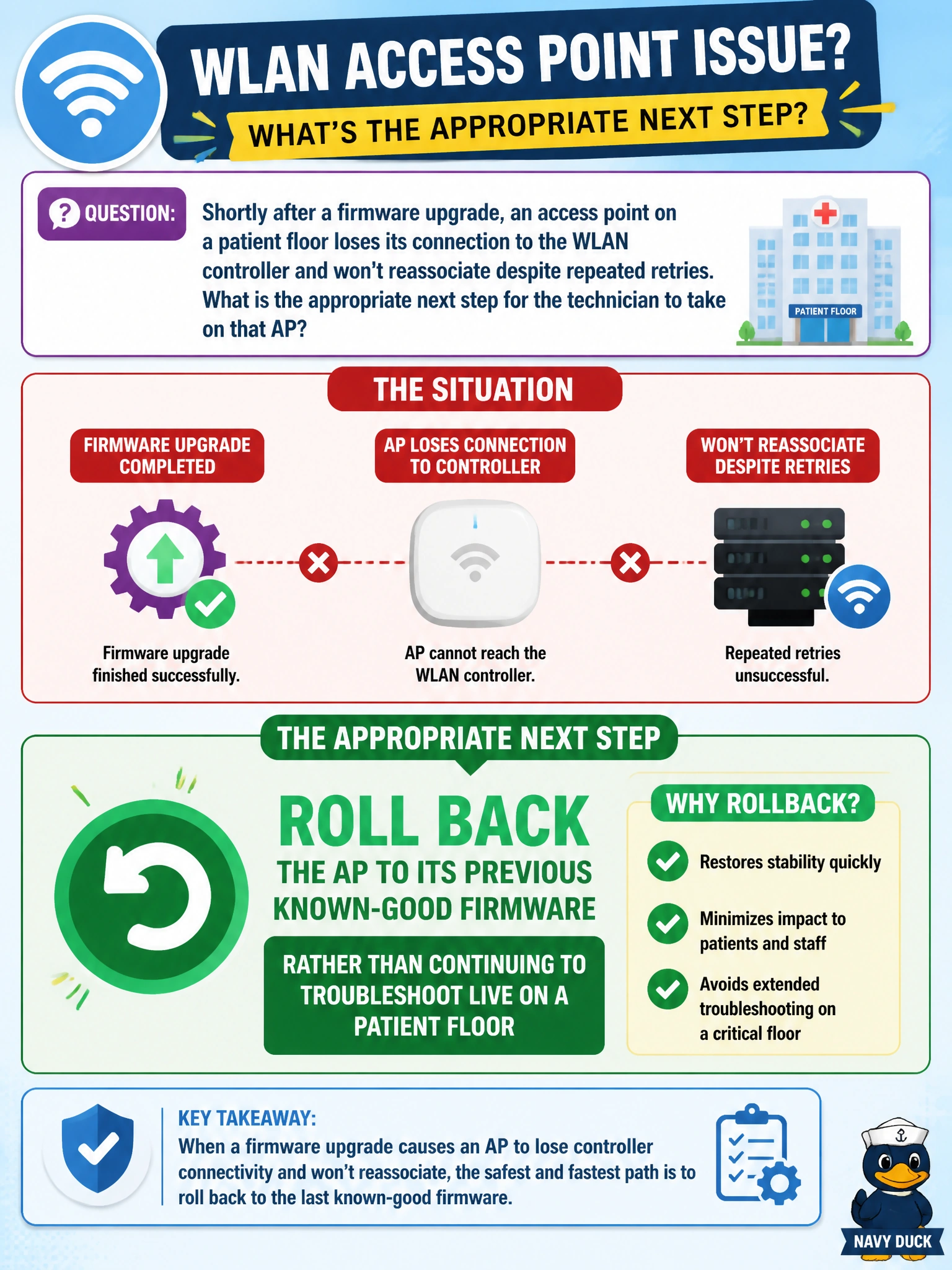
Shortly after a firmware upgrade, an access point on a patient floor loses its connection to the WLAN controller and won't reassociate despite repeated retries. What is the appropriate next step for the technician to take on that AP?
Select an answer to reveal the explanation.
Short Explanation
When a fresh upgrade breaks something on equipment patients depend on, the clock matters more than curiosity. Rolling back to the firmware that was working buys back connectivity fast, instead of debugging a brand-new problem live on a patient floor. You can investigate the root cause later, off the clinical clock, once service is restored.
Full Explanation
Because the previous firmware image is typically retained specifically for this situation, rolling back returns the access point to a configuration and software combination that was already known to work, restoring connectivity quickly rather than extending an outage while investigating an unfamiliar new failure mode under time pressure. This prioritizes patient-floor service continuity, which is the operational priority when a maintenance action causes an unplanned outage. Continuing to retry the same reassociation attempt indefinitely assumes the problem will resolve itself through repetition, but if the new firmware itself is the cause, retrying identical steps won't change the outcome and simply extends the outage. Waiting for a future software release treats an active outage as something to tolerate over an extended timeframe, which is not acceptable for equipment supporting patient-floor connectivity that needs restoring now. Replacing the physical hardware is a drastic, costly response to what is most likely a software issue introduced by the upgrade, and swapping hardware wouldn't address a firmware-level problem at all. A caveat: rollback should be followed by re-investigating the original upgrade's compatibility before attempting it again, so the same failure doesn't recur on the next attempt. As an operational check, confirm the AP reassociates with the controller and passes expected client traffic after the rollback.