
A product manager juggles three Copilot Chat threads on pricing, onboarding, and API risks, and must revisit decisions next sprint without losing context or mixing topics. Which practice for managing chat sessions best preserves continuity across start, resume, rename, pin, and archive actions?
Select an answer to reveal the explanation.
Short Explanation
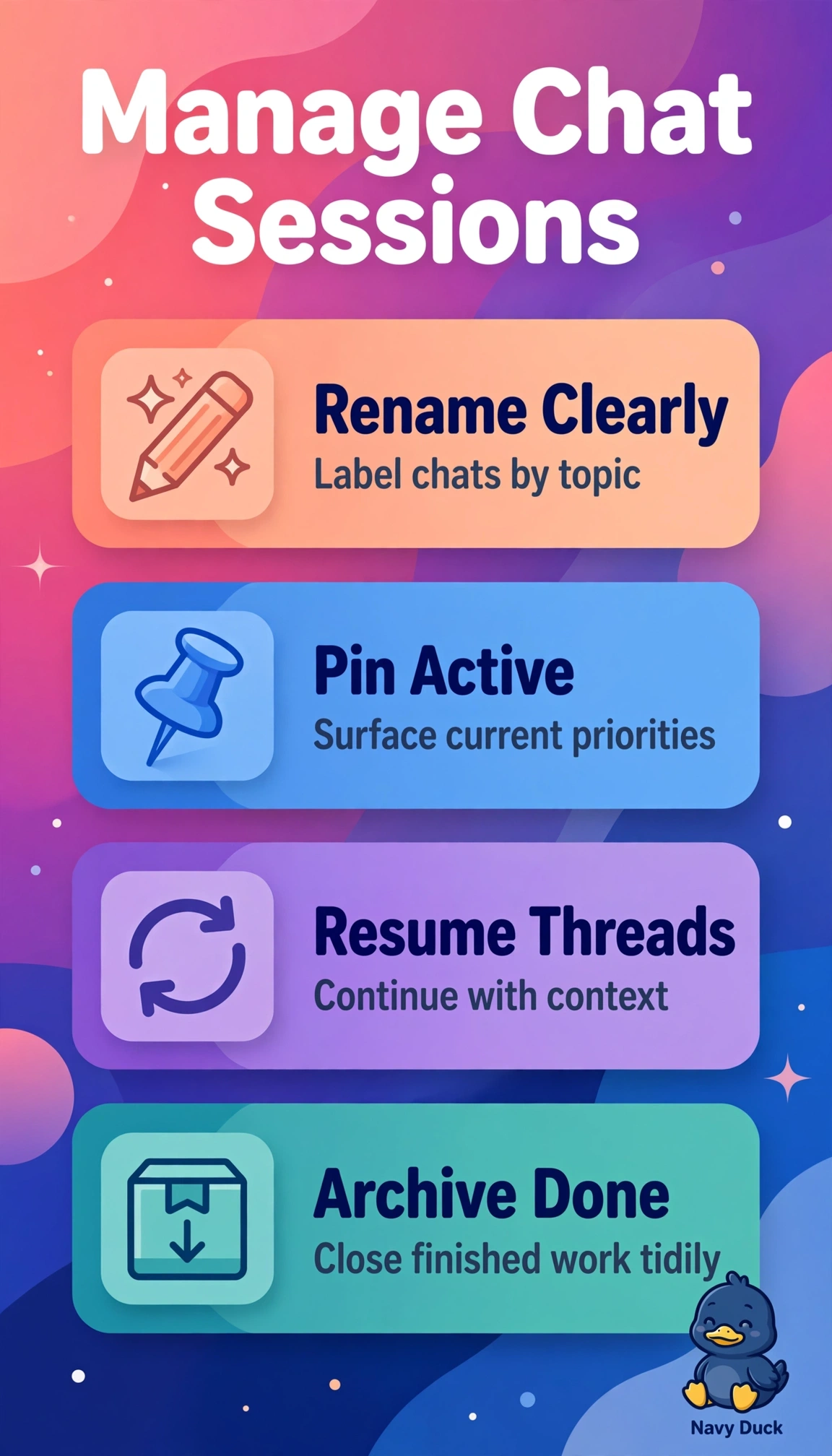
You keep projects tidy like labeled folders, not one junk drawer. Clear names plus pinned threads make pickup instant. Archiving closes loops without losing memory.
Full Explanation
The correct practice works because it maps each continuity need to a dedicated mechanism: distinct threads prevent pricing, onboarding, and API risk context from mixing, renaming by topic makes each decision retrievable next sprint, pinning keeps active work immediately accessible, resuming preserves conversation history for coherent follow-ups, and archiving retains finished work without cluttering the workspace. The unrenamed approach fails on retrievability because default titles force opening each thread to identify contents, which slows revisits and invites confusion despite good separation and archiving. The search-instead-of-pinning approach fails on accessibility because search depends on recalling exact terms and adds friction when switching often among three parallel streams, while pinning provides stable one-click access. The start-new-for-follow-ups approach fails on continuity because fresh chats discard prior reasoning, forcing re-explanation and risking inconsistency when later decisions depend on earlier context. For exams, note that prompts listing start, resume, rename, pin, and archive together test full lifecycle management, so reject any sound workflow missing one element even if it seems efficient. As a practical check, confirm each topic has a clear name, active threads are pinned, follow-ups continue in place, and completed threads are archived.