
A technical project manager coordinated a Copilot-assisted fix for a checkout bug across two branches, with linked issues, tested commits, and screenshots of before-and-after behavior. The team needs a reviewable proposal to merge the fix into main with full context for QA. Which GitHub practice should the manager use to create a pull request that enables effective collaboration?
Select an answer to reveal the explanation.
Short Explanation
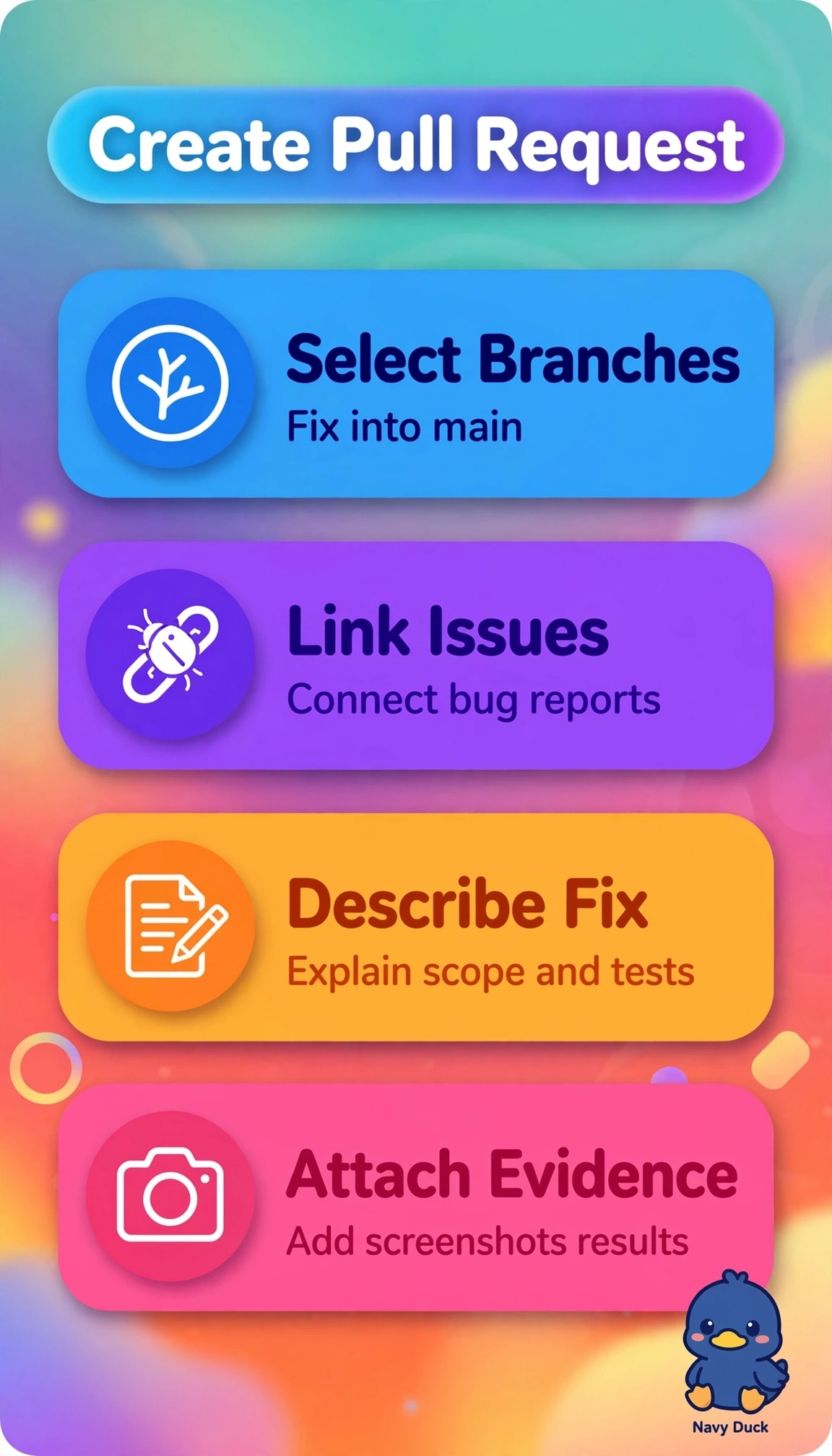
You’ve done the hard work, now package it for review. A linked pull-request bundles changes, context, and proof together. Reviewers can then approve with confidence.
Full Explanation
The correct practice is right because a pull request from the fix branch to main creates a reviewable merge proposal that preserves full context for QA, combining the code diff with linked issues for traceability, a clear description of the Copilot-assisted change, and test evidence including before-and-after screenshots. By contrast, opening a GitHub issue with screenshots and linked branches fails by collaboration concept because issues are designed for discussion and tracking work, not for proposing, reviewing, and merging code diffs with required checks. Opening a pull request without linking tracked issues fails by traceability concept because even with a good description and test evidence, QA and reviewers lose automatic closure, project board status, and audit linkage between the bug report and the fix. Opening a pull request from main into the fix branch fails by directionality concept because the base and head are reversed, which would propose merging stable code backward rather than delivering the tested fix forward into main for release. An exam caveat is to read the base-head direction and look for linked issues, description, and evidence together, since exam stems often make almost-complete choices wrong by omitting one element. As a practical check, before requesting review confirm the base is main, the head is the fix branch, the related issues are linked with keywords, and the description summarizes the root cause, changes, tests, and screenshots so QA can reproduce and verify without hunting across chat or branches.