
A product manager runs a GitHub Project board for a mobile launch with engineering issues, design mockup notes, and marketing draft tasks that live outside any repository. Progress reporting is fragmented. Which approach best links project items for unified collaboration?
Select an answer to reveal the explanation.
Short Explanation
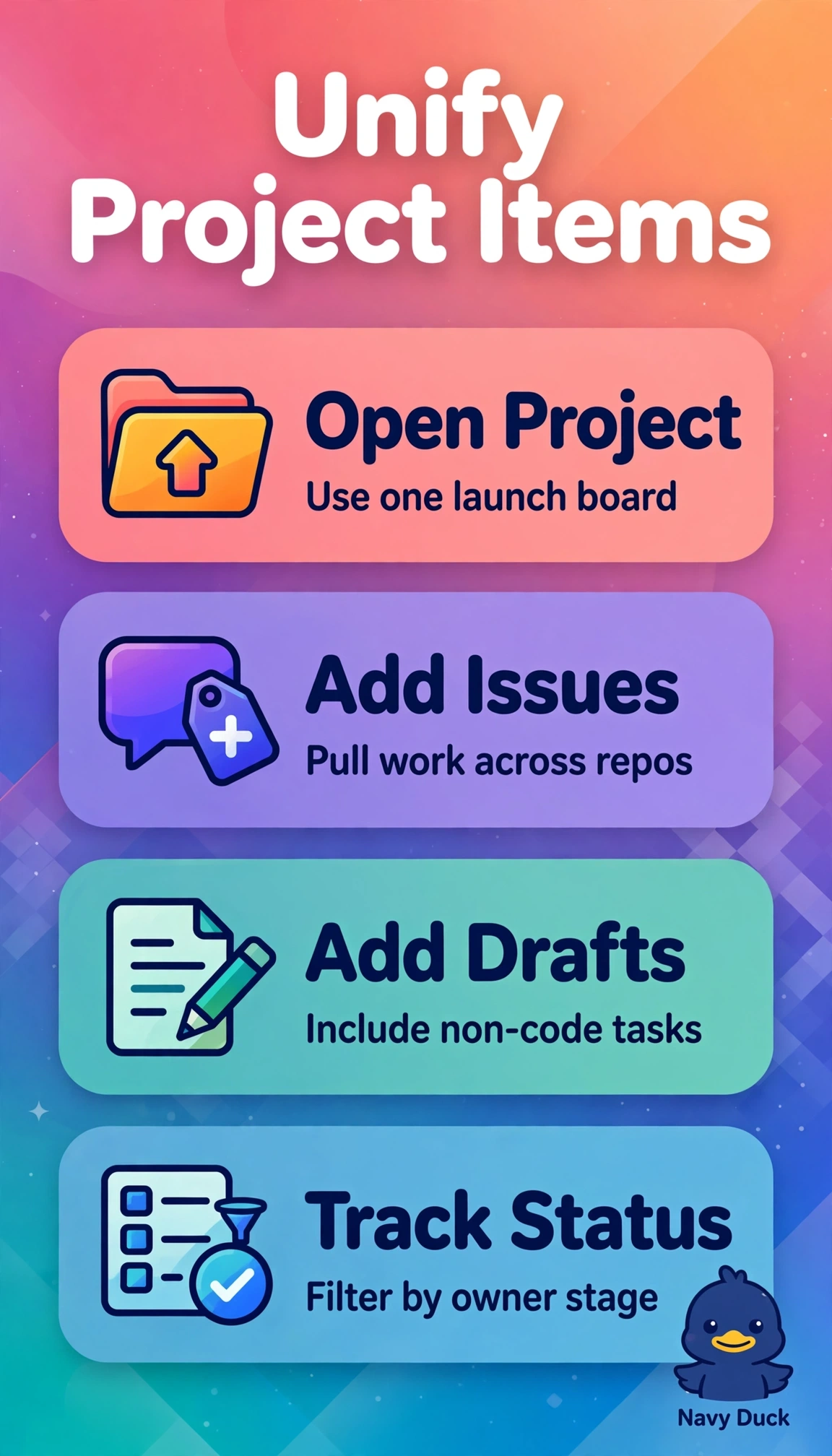
Scattered work makes launches feel chaotic for you. Centralizing issues plus draft items gives everyone one live view of progress.
Full Explanation
The correct approach works because GitHub Projects is designed as a flexible, cross-repository portfolio layer that can contain repository issues and pull requests alongside repository-independent draft issues and notes, which directly matches a mobile launch that mixes engineering issues with design mockup notes and marketing drafts living outside any repository and solves fragmented reporting with central tracking, filtering, and collaboration in one place. A shared repository milestone sounds consolidating and is commonly used for release tracking, but by concept milestones only aggregate issues and pull requests within repositories and cannot host independent drafts and notes, so the non-repository work would remain excluded. Organization-wide labels with filtered search are a sound triage and visibility practice, but by concept labels attach only to repository-hosted issues and pull requests and do not create a collaborative board that includes drafts and notes with status workflows. Dedicated per-team boards with automated syncing are a legitimate scaling pattern for autonomous teams, but by concept separation reintroduces fragmentation and delegated oversight rather than unified item-level collaboration on a single board. Exam caveat: distinguish portfolio-style tracking in Projects from time-bound grouping in milestones and from categorization in labels, reading carefully whether non-repository content must be included. Practical check: in the project, confirm you can add existing issues by URL or search plus use Add item for drafts and notes, then verify all three workstreams appear together with status fields for reporting.