
A program manager owns an agentic workflow that failed overnight while creating onboarding issues because a required HR template file was renamed, blocking 30 new hires. The file path is now known. Which interaction should the manager use to interact with agentic workflows to resolve failures?
Select an answer to reveal the explanation.
Short Explanation
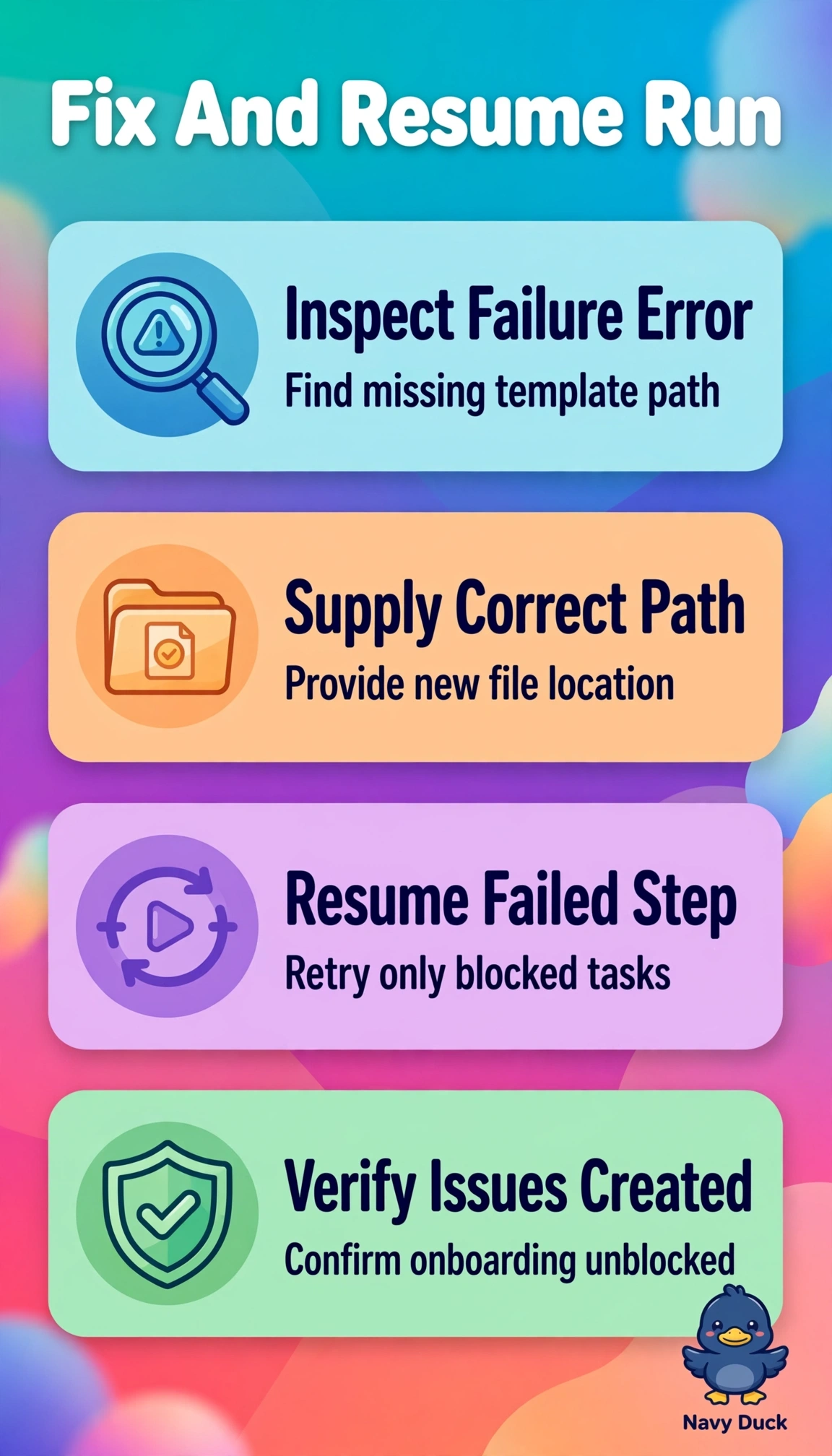
You do not need to rebuild the whole house for one bad brick. Feeding the right path and resuming keeps momentum and failure recovery turns an overnight blocker into a quick morning win.
Full Explanation
The correct interaction succeeds because it remediates the known root cause in place while preserving execution state, supplying the renamed HR template path directly to the blocked execution and continuing from the failed step so the 30 pending onboarding issues are created once without rework or duplication. Updating the shared default configuration and launching a fresh validation run fails by scope, since it improves future executions but leaves the current blocked run unresolved and risks creating duplicate work if the full batch is relaunched. Resuming from the failed step with original inputs fails by input correctness, since it retains history and position correctly but reuses the stale path that caused the failure, guaranteeing another file-not-found error because the rename is not addressed. Cloning with the corrected path and restarting the entire sequence fails by resumption granularity, since it fixes the path yet discards progress and re-executes successful steps, which can duplicate issues already created before the overnight failure. An exam caveat is to distinguish in-place recovery with corrected inputs from configuration hardening or fresh runs, as scenarios that state the path is known and ask to resolve the failed run are testing targeted resume rather than preventive edits. As a practical check, confirm the run is in a resumable failed state at the file-dependent step, verify read access to the new template location, then resume and audit that exactly 30 issues reach the expected state without duplicates.