
A product manager's documentation agent failed halfway, citing missing Confluence pages and halting before updating the changelog, with logs showing two access errors and an incomplete draft pull request. Which interaction with the agentic workflow to resolve failures restores progress safely?
Select an answer to reveal the explanation.
Short Explanation
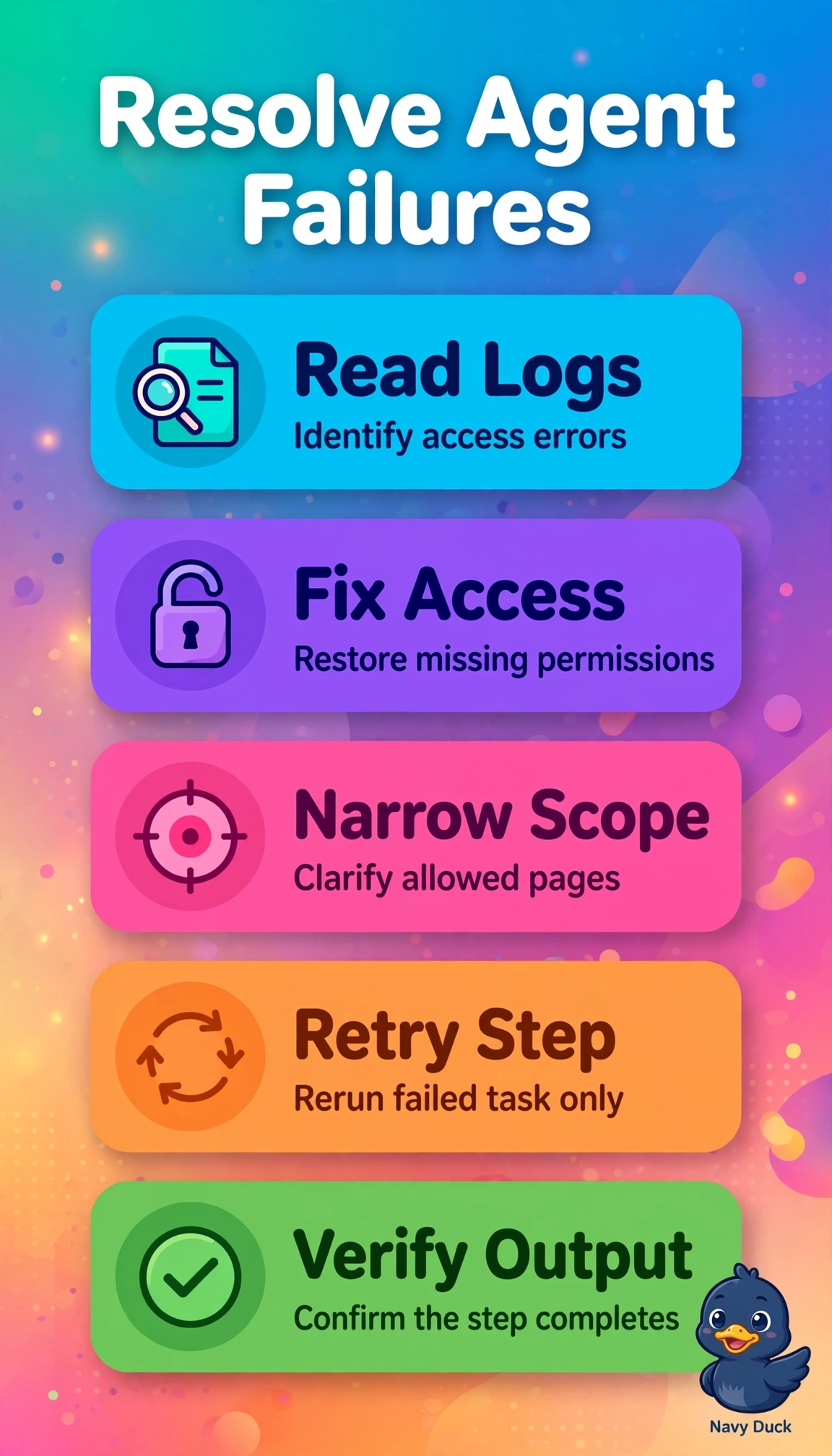
Small surgical fixes beat dramatic restarts when an agent stumbles. Your calm triage of logs and scoped retry keeps history intact, turning recovery into steady forward momentum.
Full Explanation
The correct interaction succeeds because it follows diagnose, remediate, and scoped resume: reviewing logs identifies the two access errors and missing pages as the root cause, fixing page access and scope removes the blocker, and retrying only the failed changelog step preserves completed work and the incomplete draft pull request without duplication. By contrast, fixing permissions then restarting the entire workflow violates checkpointed recovery because full re-execution discards prior progress and risks duplicate pages and conflicting pull requests. Retrying the failed step with cached content fails on remediation because stale cache cannot substitute for live Confluence sources, so the original access errors will recur and provenance stays incomplete. Retaining the incomplete draft as finished after resolving access confuses artifact preservation with task completion because the required changelog update remains unexecuted and the scope stays unverified. As an exam caveat, favor answers that combine log analysis, permission remediation, and targeted retry, since partial fixes are designed to look sufficient. As a practical check, confirm Confluence read succeeds, confirm out-of-scope pages with the manager, then trigger the single-step retry and verify the changelog commit links to the updated draft.