
A community nonprofit runs a GitHub Project to coordinate a city food drive with volunteer sign-up issues, sponsor commitment notes, and delivery route tasks owned by different teams. Leaders need linked context visible on each card and grouped views across workstreams. Which project linking practice keeps related work connected and filterable?
Select an answer to reveal the explanation.
Short Explanation
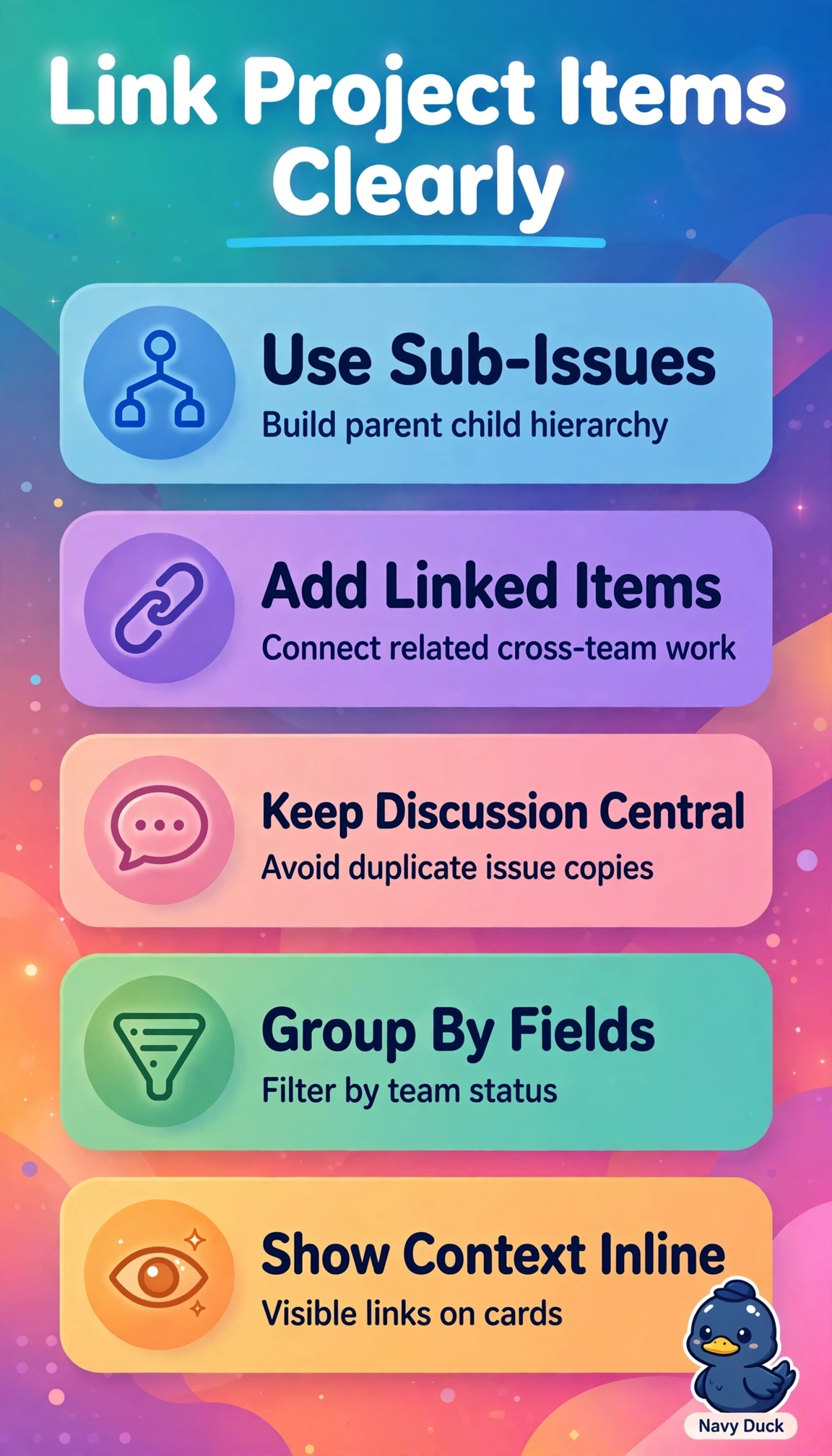
You’re weaving threads into one tapestry, not scattering sticky notes. Linked items keep volunteer, sponsor, and route work traceable in grouped views without duplication.
Full Explanation
The correct practice is right because sub-issues and linked items create explicit persistent relationships that surface linked context directly on each card while remaining queryable in Projects for grouping and filtering across volunteer, sponsor, and delivery workstreams without duplicating ownership. Consistent labels and custom project fields are widely used and do enable powerful grouped and filterable views, but they fail by concept because categorization is not connection and does not preserve visible linked context between distinct issues. Task lists inside a single parent issue are excellent for consolidating checklists and small steps in one place, but they fail because embedded tasks are not independently linked, assignable, and filterable work items across workstreams. Milestones with clear team owners are standard for deadlines and accountability, but they fail because temporal and ownership grouping does not create relational links that keep related work connected and explorable from each card. Exam caveat is to distinguish organizing, decomposing, and scheduling from linking whenever the stem emphasizes both visible related context and grouped views, since only linked items satisfy both at once. Practical check is to open any card to confirm related issues appear as linked context and then filter the project view by workstream to verify the relationships persist in grouped display.