
A project coordinator monitors a live agentic workflow migrating 800 knowledge articles that is currently summarizing drafts, with a stakeholder asking to clarify tone mid-run without losing progress or restarting the job. Which in-run interaction should the coordinator use to guide the agentic workflow while it is running?
Select an answer to reveal the explanation.
Short Explanation
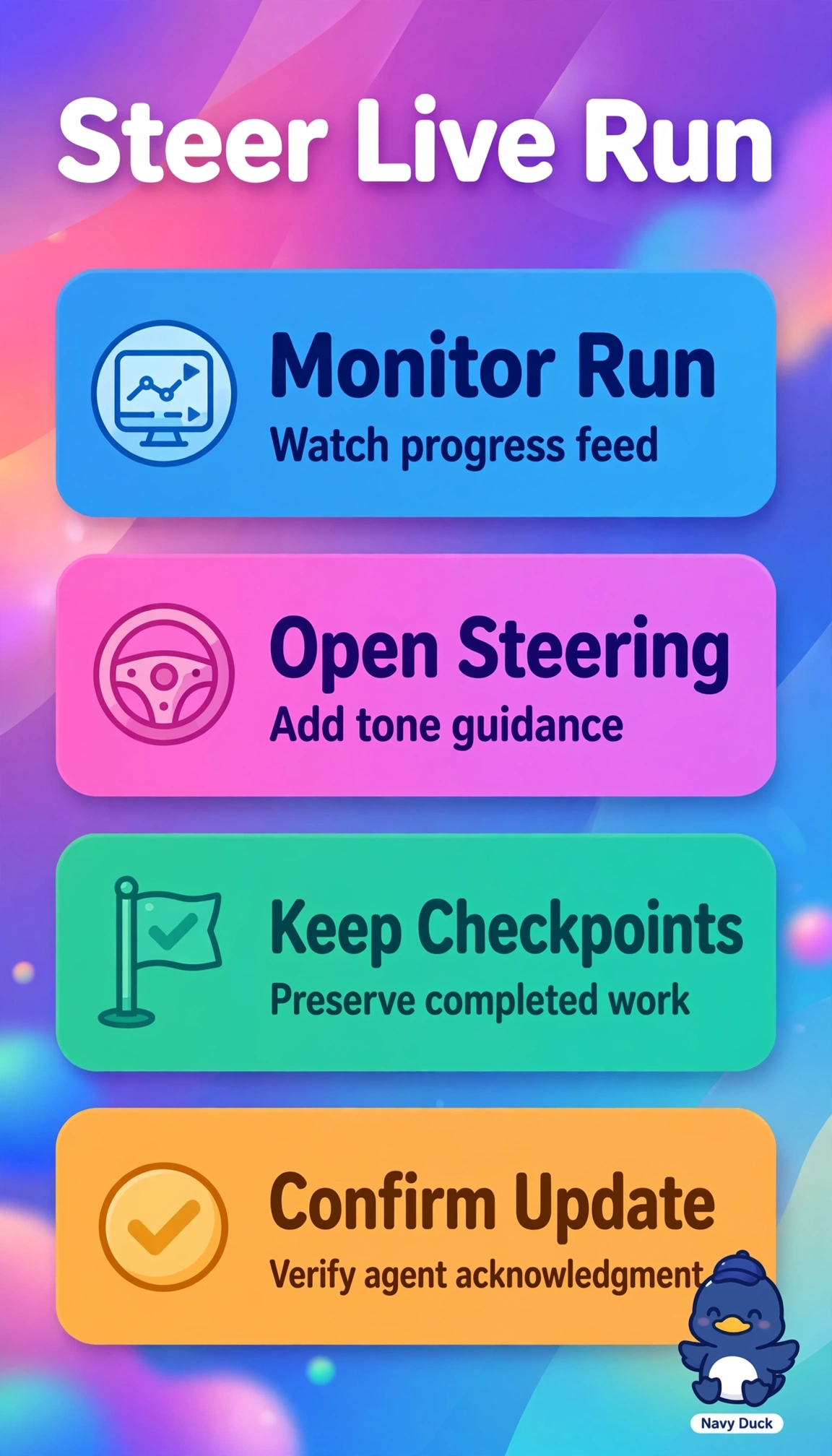
You’re nudging a moving cart, not rebuilding it, and steering keeps the work moving. Like giving a driver a new turn, you guide the remaining summaries without stopping the trip.
Full Explanation
A live steering message is right because an agentic workflow can accept new natural-language guidance in its running session. Sending the clarified tone there updates the session context for summaries still in progress or queued, without discarding completed work or restarting the migration. Updating the saved instruction template may help future runs, but it changes the reusable definition rather than the instructions already loaded into this run. Directing the agent to pause and revise completed summaries is a valid way to remediate earlier output, but it works backward, spending time and resources reprocessing work instead of guiding the remaining summaries forward. Inserting a human approval step can provide useful governance, but it does not itself tell the agent what tone to use; it also adds per-summary delays that do not fit the request to continue autonomously. An exam caveat is that runtime session state and saved workflow definitions are different: wording such as “live,” “while running,” and “without restarting” signals session steering rather than a template change, retrospective revision, or added review gate. In practice, confirm that the steering message appears in the run transcript, then spot-check the next few summaries for the requested tone before letting the bulk queue proceed.