
A technical project manager coordinates a mobile release where a payments pull request needs a security review, a design check, and workload balance across five engineers. Which method best assigns pull request reviewers to ensure accountable collaboration?
Select an answer to reveal the explanation.
Short Explanation
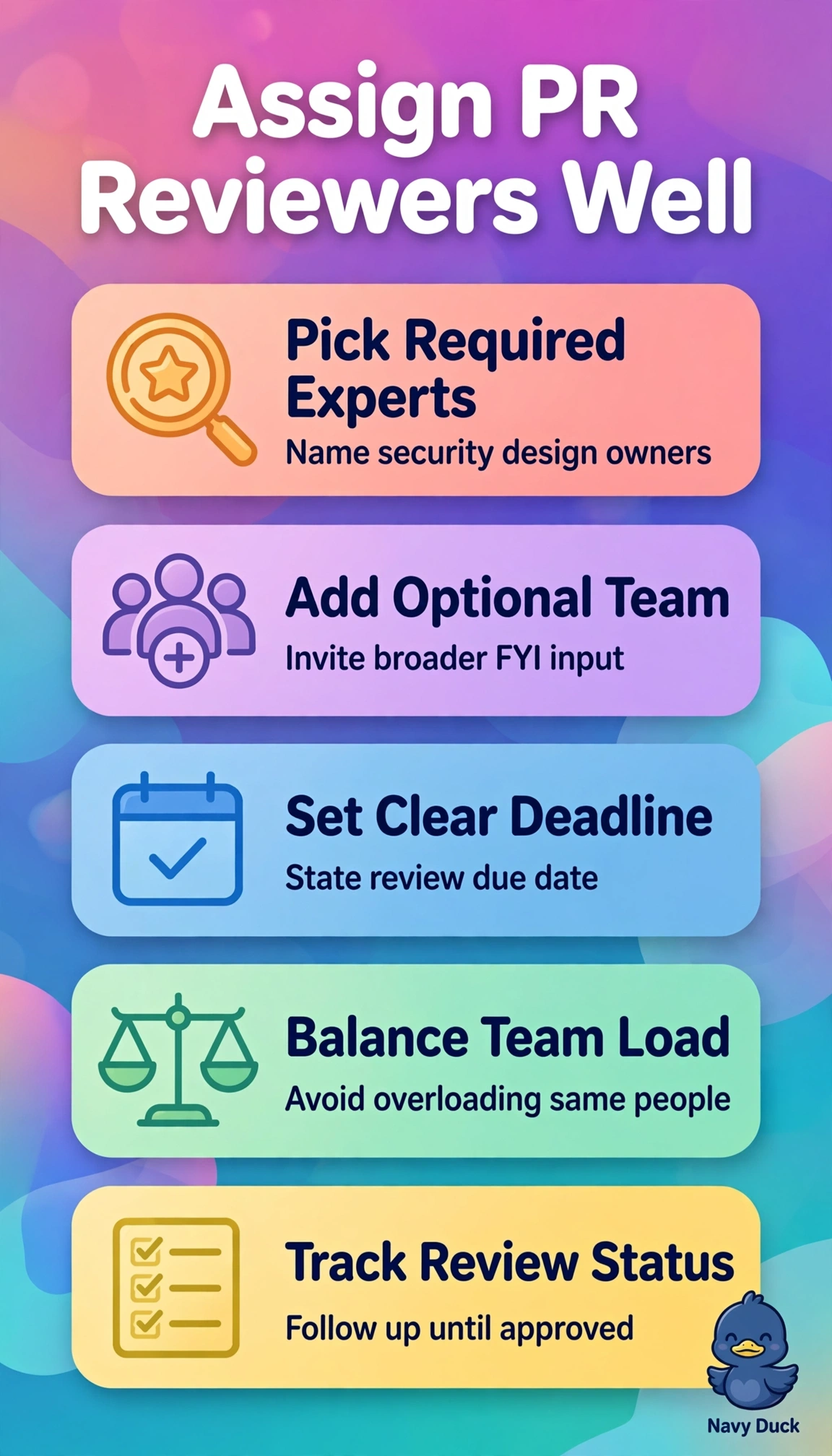
Clear owners move releases forward while crowds stall. Named reviewers plus deadlines act as your corner-kicks, everyone knows who takes the shot and when you achieve better velocity.
Full Explanation
Assigning reviewers works because GitHub routes explicit requests, distinguishes required versus optional input, and surfaces workload and due expectations, creating accountability for security and design sign-off. Mentioning everyone in a comment fails by diffusion of responsibility because notifications without assignment rarely produce timely, traceable reviews. Assigning the author as sole reviewer fails by lack of segregation because self-approval removes independent validation. Adding everyone as required fails by review bottleneck because unanimous approval slows merges and obscures whose expertise actually matters. Exam caveat: GH-700 tests collaboration as targeted assignment with balanced workload, not broadcast mentions. Practical check: verify the sidebar shows named reviewers, required status, and response activity before merging.