
A program manager launched an agentic workflow that drafts release notes from 40 merged pull requests while the team watches progress live. Mid-run it flags two ambiguous customer-facing changes and pauses for guidance before continuing. Which human-in-the-loop interaction best steers the running agentic workflow to completion?
Select an answer to reveal the explanation.
Short Explanation
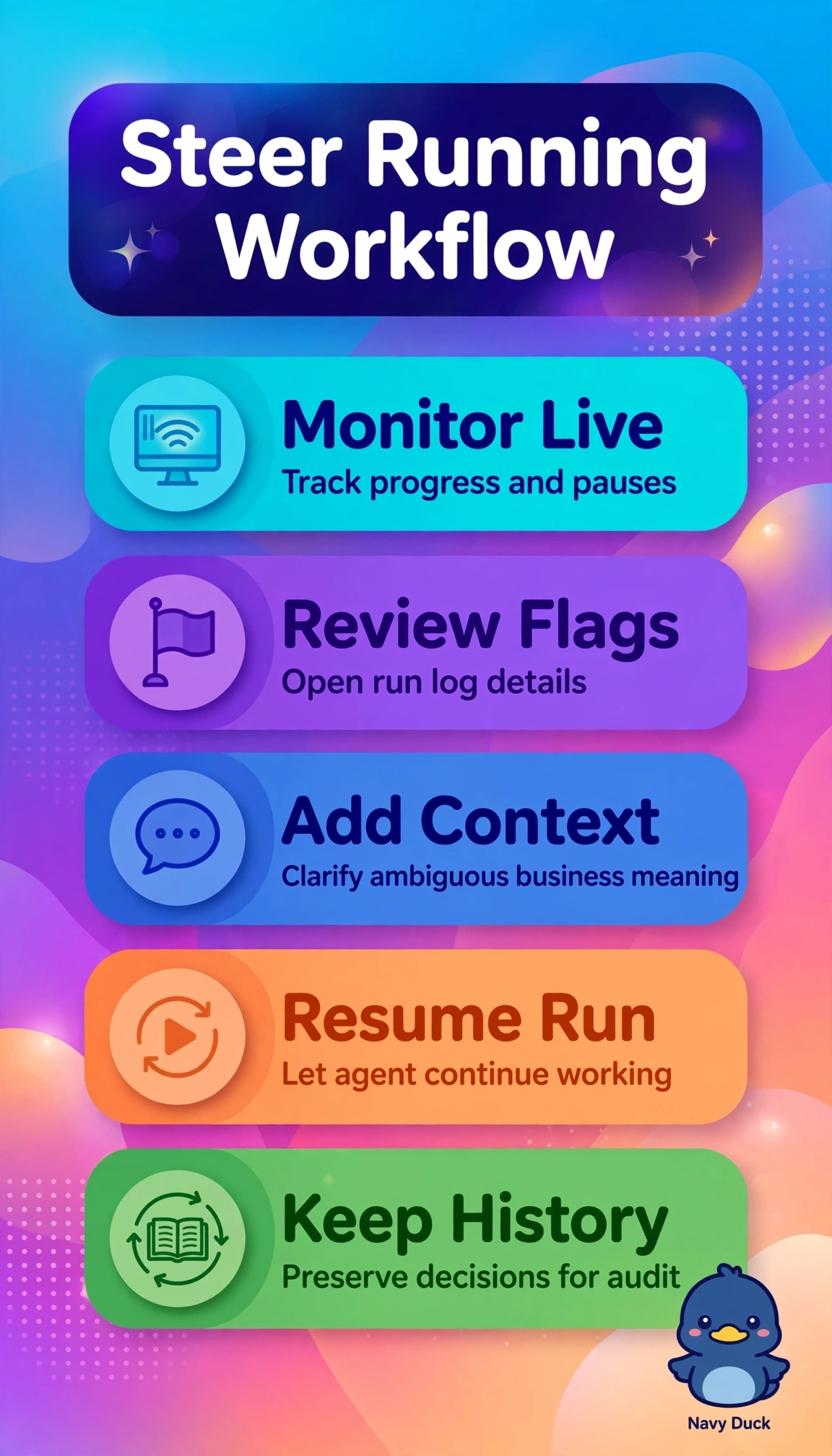
You review the flagged changes and give the agent the business context it needs to continue the same run. Mid-run steering lets you resolve ambiguity while the work is underway, rather than waiting to improve a later draft.
Full Explanation
The workflow pauses mid-run because two customer-facing changes are ambiguous, so effective steering requires reviewing those flagged changes and submitting clarifying business context to resume the same run. The run log grounds your decision in what the agent actually flagged across the 40 merged pull requests, and the context resolves the ambiguity rather than merely permitting processing to continue. Approving the changes as non-breaking and allowing automatic continuation provides authorization without information; the underlying ambiguity remains, which may lead to vague or inaccurate notes. Posting context in team chat gives observers information but does not submit actionable input to the workflow, so the paused run is not steered. Supplying context after the run finishes may help the next release-notes draft, but it does not guide the current run to completion. Exam caveat: distinguish resuming the same paused execution with new information from simply approving continuation, sharing context with observers, or improving a future draft; only the first addresses both pause recovery and completion. Practical check: after submitting guidance, confirm the run moves from awaiting input to processing, then spot-check that the final notes reflect the clarification for both flagged changes.