
A GitHub Copilot agent can perform the following actions: (1) read repository files, (2) create a branch, (3) deploy to production, and (4) write a new secret to GitHub Secrets. How should these actions be classified by risk level?
Select an answer to reveal the explanation.
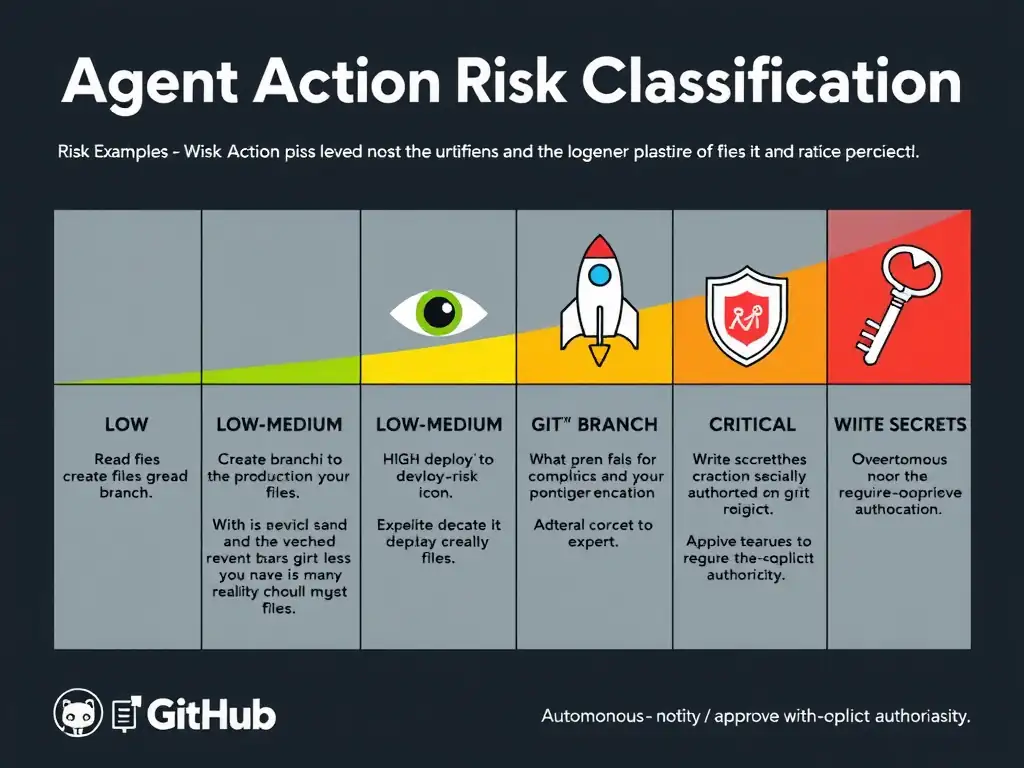
Short Explanation
You're peeking in a window when you read a file and opening a door when you create a branch — low to modest stakes. You're turning on a nuclear reactor when you deploy to production and handing out master keys when you write a secret — high to critical stakes.
Full Explanation
Agent actions must be classified by their operational, security, and compliance risk to determine the appropriate level of oversight and approval required.
Why the tiered classification is correct: - Read repository files (low): Read-only, no side effects, easily reversible by doing nothing. - Create a branch (low-medium): Mutable but easily deleted, no production impact, isolated from main. - Deploy to production (high): Potentially affects end users, may be difficult to roll back instantly, compliance risk. - Write a secret to GitHub Secrets (high/critical): Irreversible credential exposure risk, security/compliance impact, extremely difficult to fully audit if the secret is misused.
Why treating all four actions as equally risky is wrong: Repository interactions vary enormously in risk. Treating all repository actions as equally risky leads to either under-controlling dangerous actions or over-controlling safe ones.
Why treating branch creation as high risk and the others as low risk is wrong: Branch creation is a low-medium risk action. The idea that creating a branch is the riskiest action ignores the much greater risks of production deployment and secret management.
Why treating deployment as low risk because it can be rolled back and secret writing as medium risk because secrets can be rotated is wrong: The reversibility of production deployments depends on the application — many production deployments involve database migrations or external API calls that cannot be instantly rolled back. Secrets that have been exposed cannot be 'unread' by unauthorized parties, even if rotated afterward.