
What problem do organization-required workflows (or equivalent required CI policy mechanisms) aim to solve for enterprise administrators?
Select an answer to reveal the explanation.
Short Explanation
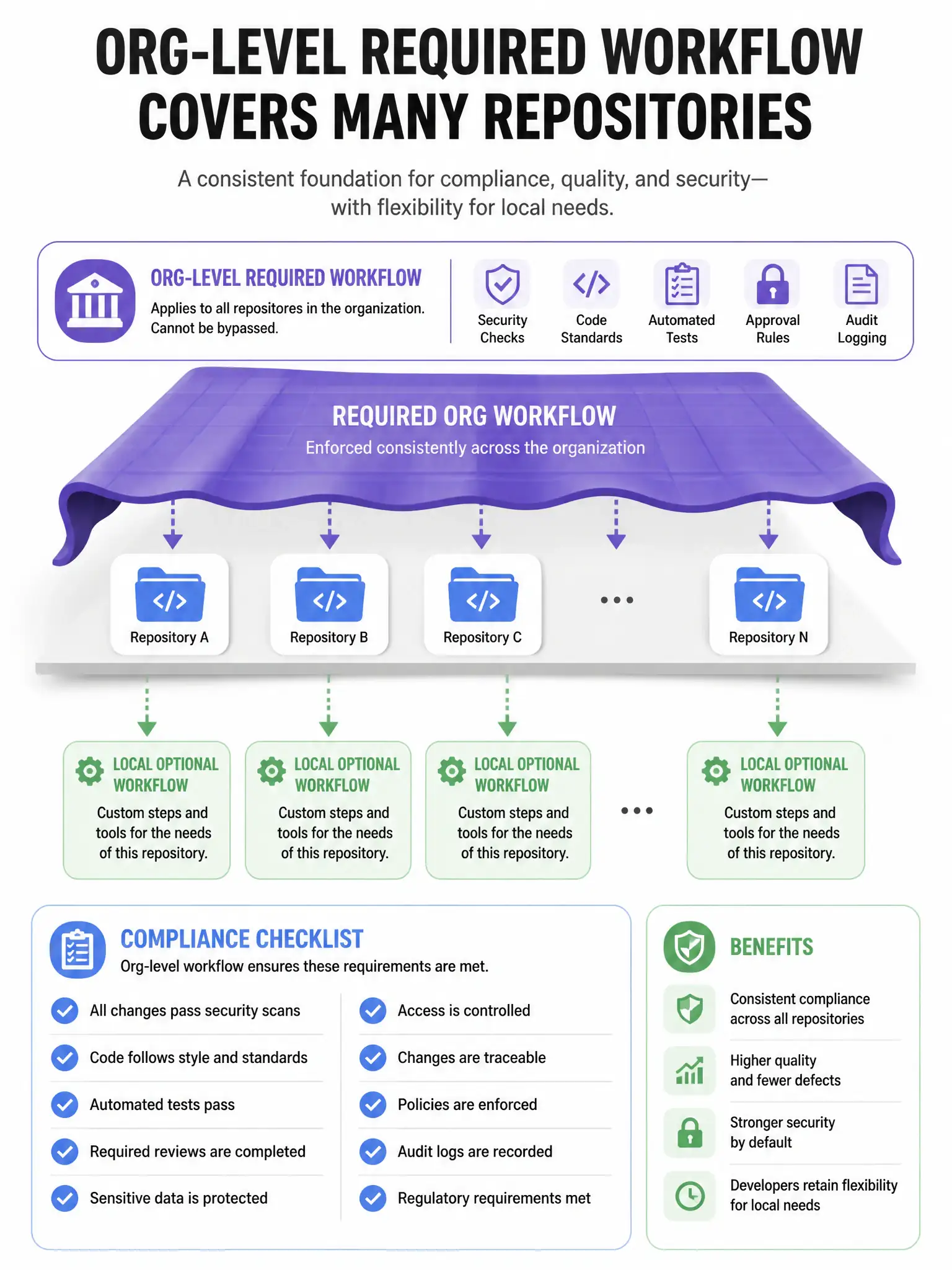
You need required workflows to push must-run CI from the organization center, so every repository gets mandated security or compliance checks—even repos that never added their own workflow file. They give you centrally enforced automation instead of hoping each team opts in.
Full Explanation
Enterprises need consistent security scanning, policy checks, or provenance jobs across hundreds of repositories. Required workflows or organization-level required CI mechanisms apply centrally defined automation so compliance does not depend on every team copying YAML correctly. Related controls may interact with required workflows, but the administrative goal is mandated coverage: centrally mandated automation—such as security or compliance jobs—runs across many repositories without relying solely on each repository to opt in. These mechanisms do not automatically convert private repositories to public when CI fails, and they do not delete all existing workflows older than 30 days without notice. They also do not replace branch protection and rulesets completely, because those controls still govern merge requirements. Platform teams should version central workflows carefully, communicate failures clearly, and provide self-service exceptions with approval.