
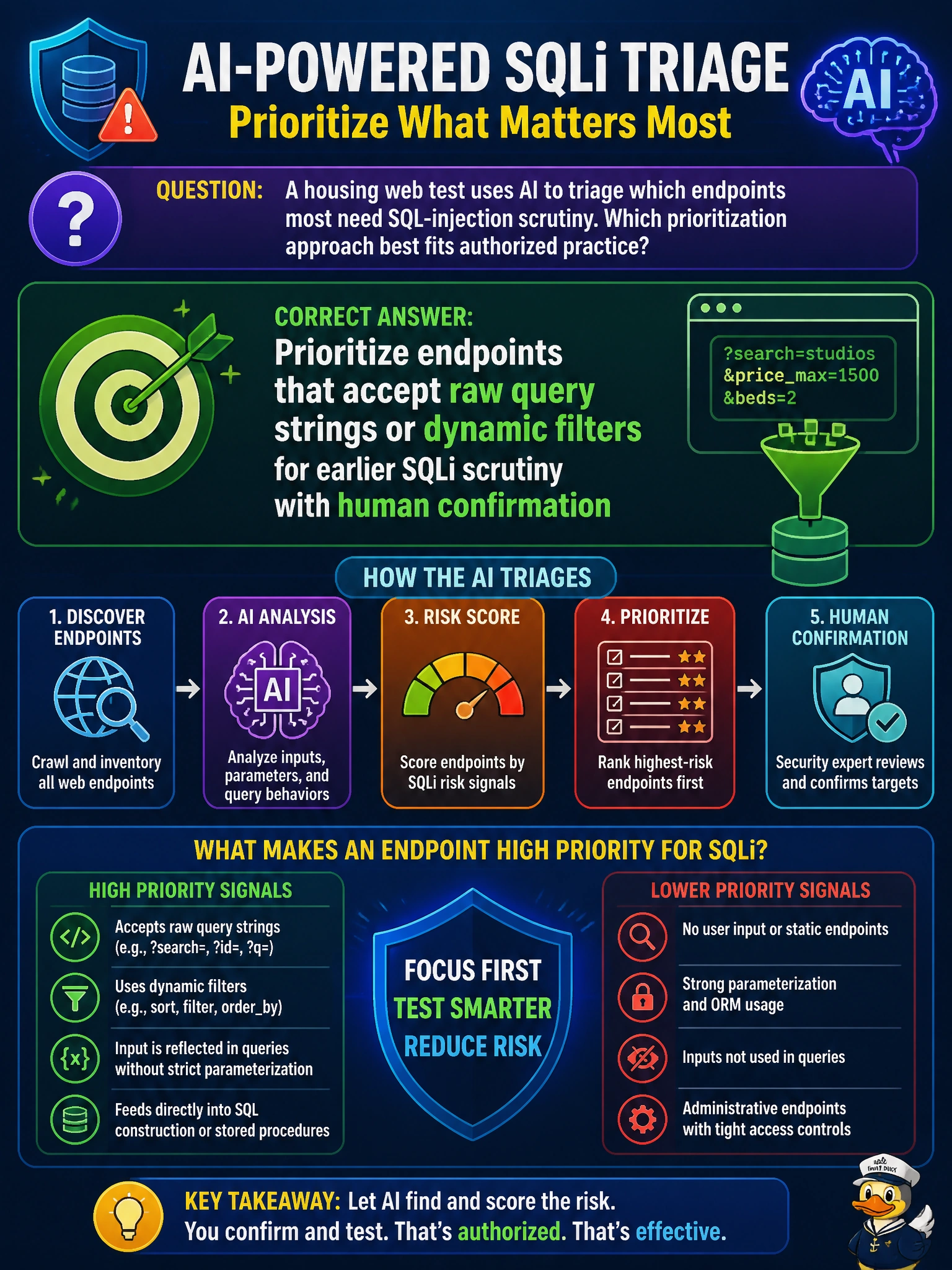
A housing web test uses AI to triage which endpoints most need SQL-injection scrutiny. Which prioritization approach best fits authorized practice?
Select an answer to reveal the explanation.
Short Explanation
Aim the flashlight where raw query strings and dynamic filters live—that is where SQLi likes to hide. Static image URLs are usually the wrong treasure map. AI can rank suspects; humans still confirm.
Full Explanation
AI triage for SQL-injection scrutiny should prioritize where dynamic query construction is most likely. Endpoints that accept raw query strings or dynamic filters are higher-probability SQLi candidates than static asset URLs. The correct approach prioritizes those endpoints for earlier scrutiny and still requires human confirmation before calling a finding confirmed on a housing web application. AI ranks suspicion; humans validate.
Ignoring all query-string endpoints because modern frameworks are never vulnerable is a complacency myth—frameworks reduce but do not eliminate unsafe query construction. Only testing static image URLs as highest SQLi risk aims at the wrong surface. Deferring all database-facing endpoints until after production go-live marketing postpones security work past the point of cheapest repair and contradicts authorized pre-release testing practice.
Exam caveat: prioritization items reward raw query-string/dynamic-filter focus with human confirmation, not framework-immunity myths. Operational check: inventory endpoints with dynamic filters, let AI help rank them, confirm hits manually, and schedule SQLi scrutiny before marketing-driven go-live pressure locks in debt.