
A school board asks how social-engineering exercise results should be used for staff. Which recommendation best reflects ethical municipal practice?
Select an answer to reveal the explanation.
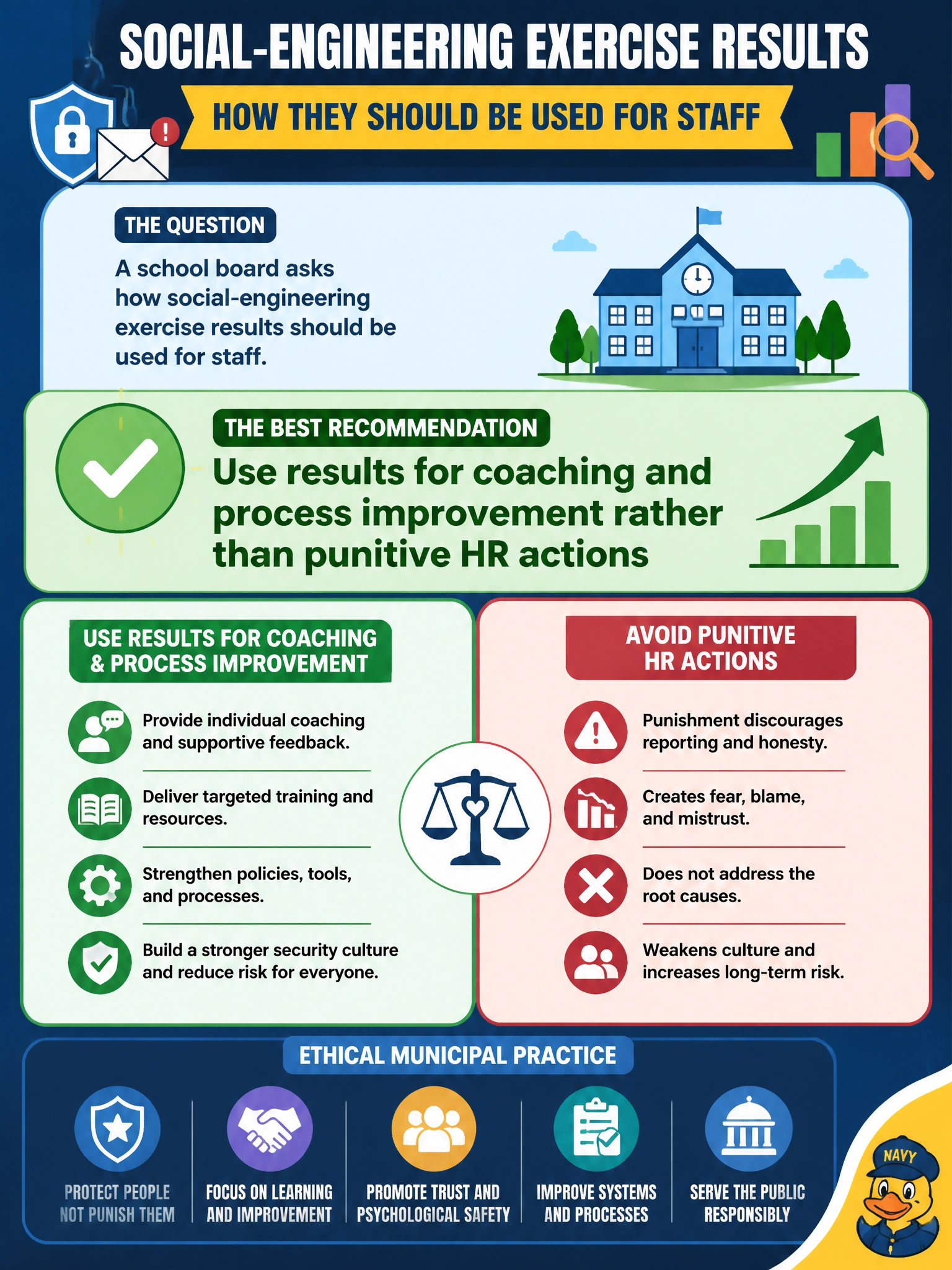
Short Explanation
SE results are a coaching flashlight, not a guillotine. Fire-on-first-click and public shame boards teach fear, not safer habits.
Full Explanation
Ethical municipal use of social-engineering exercise results centers on coaching, awareness remediation, and control or process improvement—not on humiliation or first-failure punishment. School-board and HR-aligned programs treat clicks and report failures as signals for training design, help-desk verification hardening, and clearer reporting paths. That approach builds reporting culture and reduces dwell time after mistakes instead of driving fear-based silence.
Automatic termination for a single authorized lure fails by concept: it confuses a controlled learning instrument with a misconduct investigation and typically destroys psychological safety. Publishing named fail lists on the district homepage is public shaming that harms staff and invites legal and labor issues. Selling click data to third-party recruiters commercializes employee security telemetry and violates trust, privacy norms, and usually policy.
Exam caveat: Coaching orientation does not forbid progressive discipline for willful, repeated, or malicious violations after due process—especially where policy was clear and training was provided. The distinction is using an authorized awareness metric as an immediate guillotine or public spectacle versus a governed HR process. Aggregate reporting to leadership is appropriate; naming and shaming is not.
Operational check: Confirm the SE program charter states results are for coaching and control improvement; verify dashboards default to aggregate metrics; and ensure HR workflows cannot auto-trigger termination from a single campaign click without human review and policy alignment.