
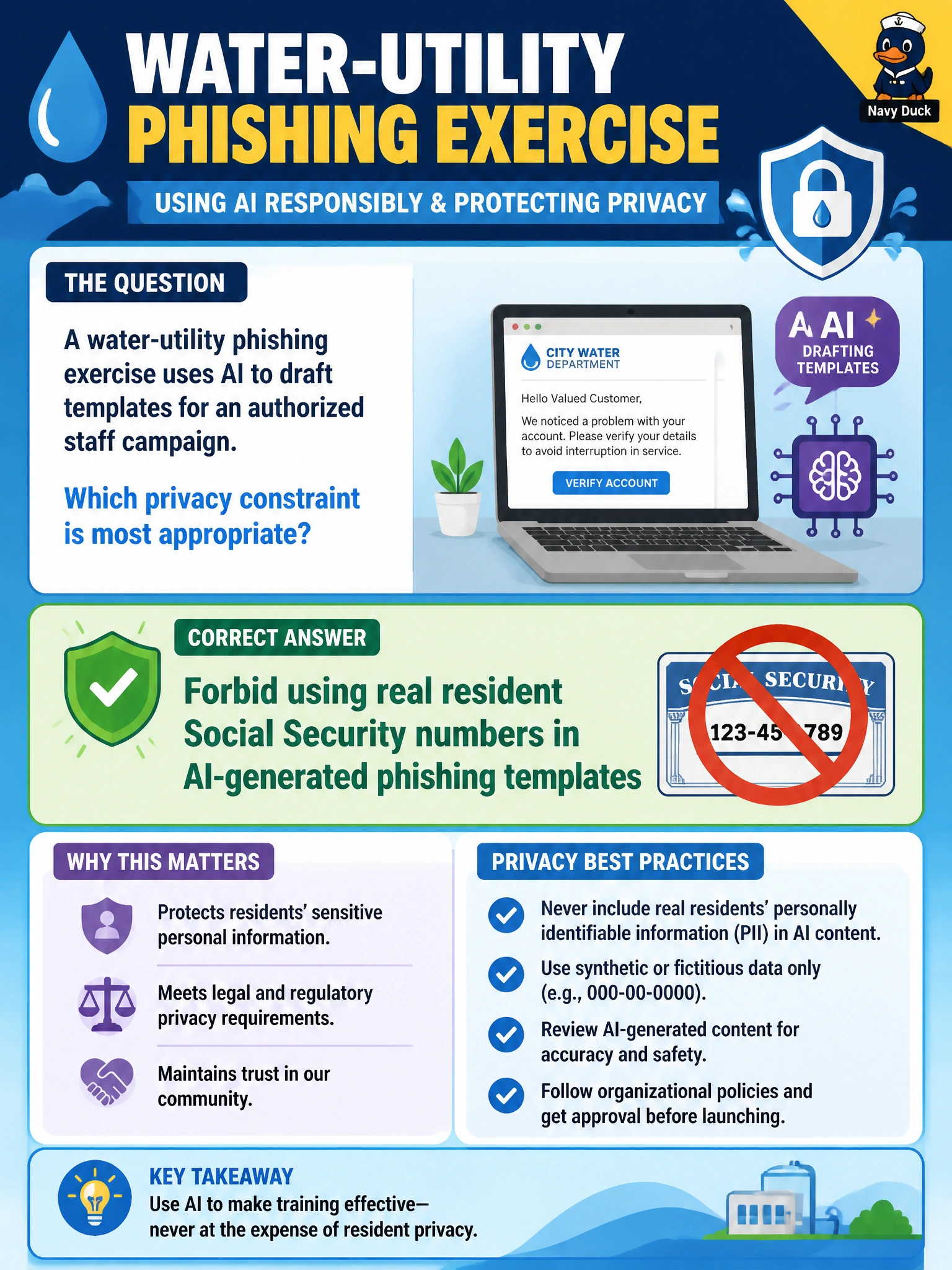
A water-utility phishing exercise uses AI to draft templates for an authorized staff campaign. Which privacy constraint is most appropriate?
Select an answer to reveal the explanation.
Short Explanation
Resident SSNs are not props for the water-utility phishing play. Use fake markers, not real identity fuel, even in ‘drafts’ or tabletops. Privacy constraints are part of the ROE, not optional flavor text.
Full Explanation
In a water-utility phishing exercise that uses AI to draft templates for an authorized staff campaign, the strongest privacy constraint is to forbid using real resident Social Security numbers in those templates. Resident SSNs are high-risk identity data; placing them in generative prompts, drafts, or lures creates breach and misuse risk that awareness training does not justify. Synthetic markers or clearly fake identifiers preserve educational value without weaponizing real civic identity data. Allowing real resident SSNs if they appear only in internal drafts that never leave the SOC still expands the sensitive-data footprint inside AI logs, tickets, and analyst workstations. Preferring real SSNs over synthetic markers because detectors supposedly train better on production identifiers confuses production detection engineering with staff phishing awareness content and wrongly treats resident PII as free training fuel. Treating resident SSN use as acceptable whenever the campaign subject line says ‘tabletop only’ is a labeling fallacy—subject-line wording does not create a privacy exception. Exam caveat: GOAA municipal framing expects candidates to keep real resident identity data out of AI phishing content even under authorization banners. Operational check: ban real SSNs and analogous resident identifiers in prompt packs and templates; use synthetic tokens; have privacy or legal review confirm the marker scheme before the water-utility send.