
An attacker performs reconnaissance and discovers that the target organization uses a BGP autonomous system number and announces specific IP prefixes to the internet. How could a threat actor attempt to exploit this information?
Select an answer to reveal the explanation.
Short Explanation
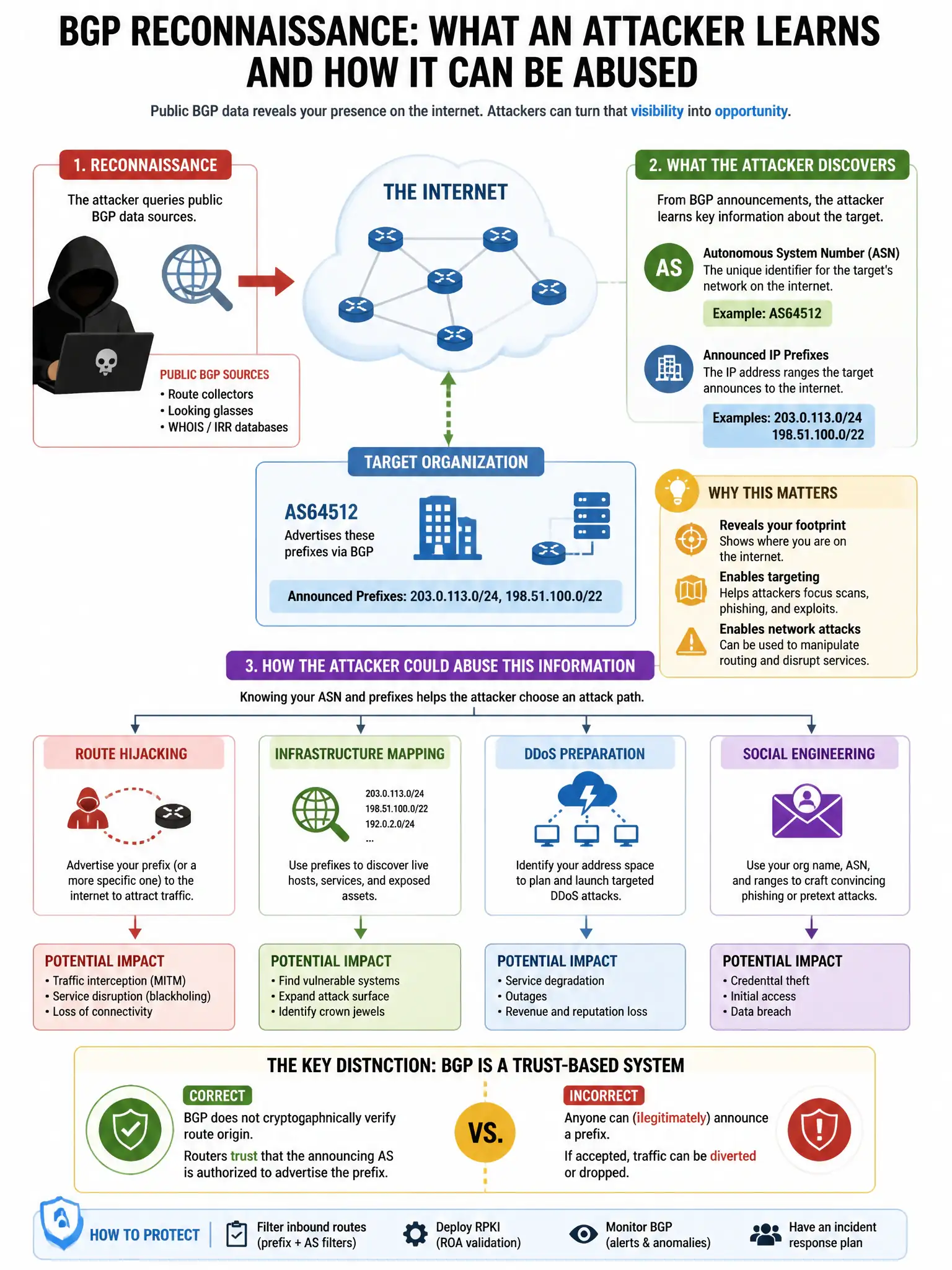
Here's the deal — you can exploit this with BGP hijacking because BGP is a trust-based protocol. Attacker-controlled ASNs can announce more specific routes for the victim's IP space, causing internet routers to prefer the attacker's route and redirect traffic through attacker-controlled infrastructure for interception or blackholing.
Full Explanation
The BGP hijacking choice is correct because BGP is a trust-based protocol; an attacker-controlled ASN can announce more specific routes, meaning longer prefixes, for the victim's IP space, causing internet routers to prefer the attacker's route and redirect traffic, such as email and web requests, through attacker-controlled infrastructure for interception or blackholing. The MAC-address spoofing choice is wrong because MAC spoofing is a LAN attack and has no effect on internet-scale routing. The ARP flooding choice is wrong because ARP flooding targets LAN switches; BGP routing operates at internet scale and is not affected by LAN ARP attacks. The ICMP redirect choice is wrong because ICMP redirects affect individual host routing tables on a local segment; they do not affect BGP routing.