
A penetration tester performs an nmap scan and uses -sV --script=banner flags. What information do these flags collect?
Select an answer to reveal the explanation.
Short Explanation and Infographic
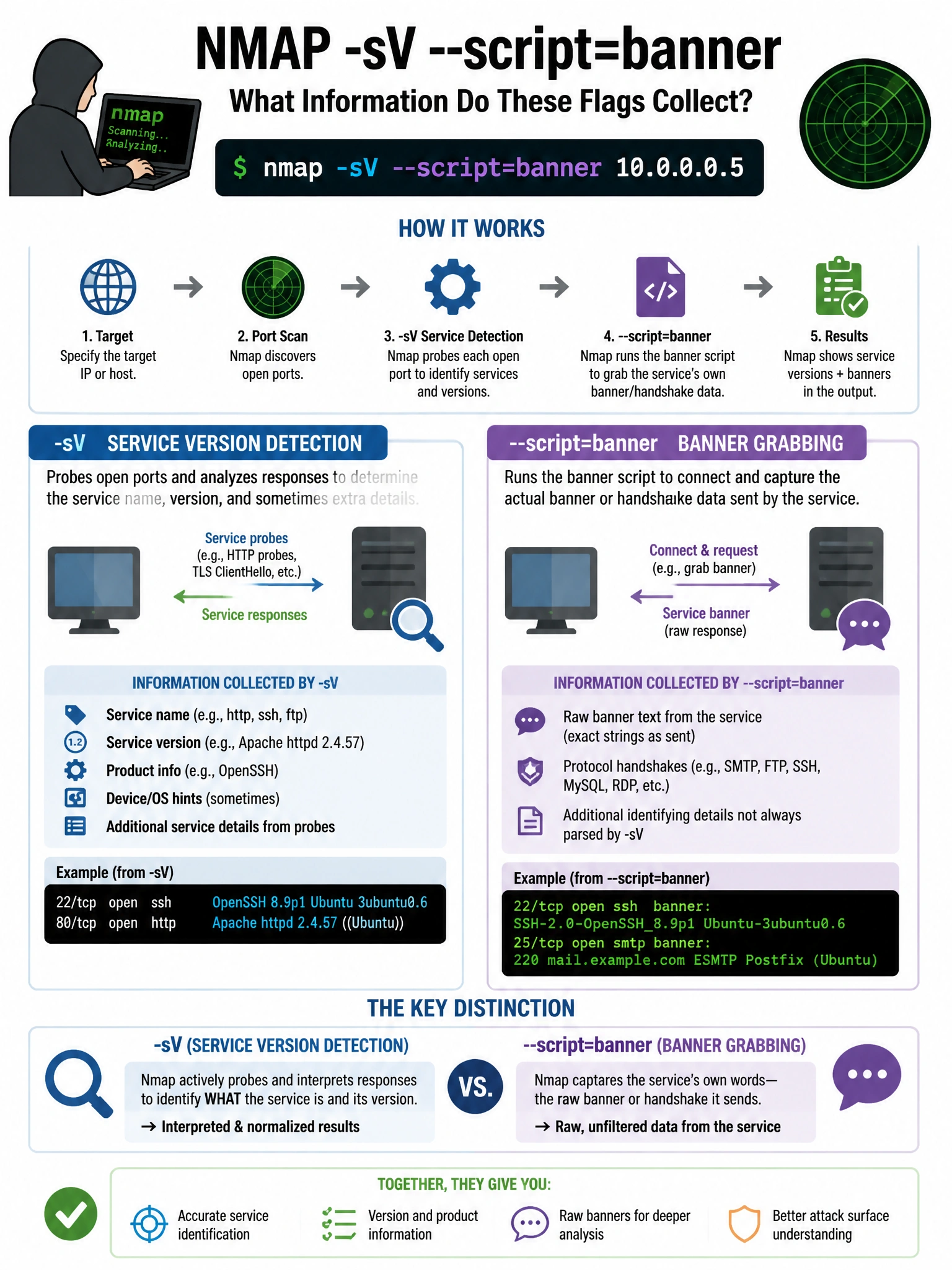
Here's the deal — b is correct because -sV performs service version detection by sending probes to open ports, and --script=banner invokes the NSE banner script to capture raw service banners; together they collect detailed service version information critical for identifying known CVEs. A is wrong because UDP scanning uses -sU, and OS fingerprinting uses -O; the described flags perform service detection, not UDP or OS scanning.
Full explanation below image
Full Explanation
B is correct because -sV performs service version detection by sending probes to open ports, and --script=banner invokes the NSE banner script to capture raw service banners; together they collect detailed service version information critical for identifying known CVEs. A is wrong because UDP scanning uses -sU, and OS fingerprinting uses -O; the described flags perform service detection, not UDP or OS scanning. C is wrong because -sS is the stealth SYN scan flag; -sV is for version detection and does not specifically hide the scanner. D is wrong because nmap does not implement OWASP's web testing methodology; web application testing requires purpose-built tools like Burp Suite.