
What is the difference between a SIEM use case and a SIEM correlation rule?
Select an answer to reveal the explanation.
Short Explanation and Infographic
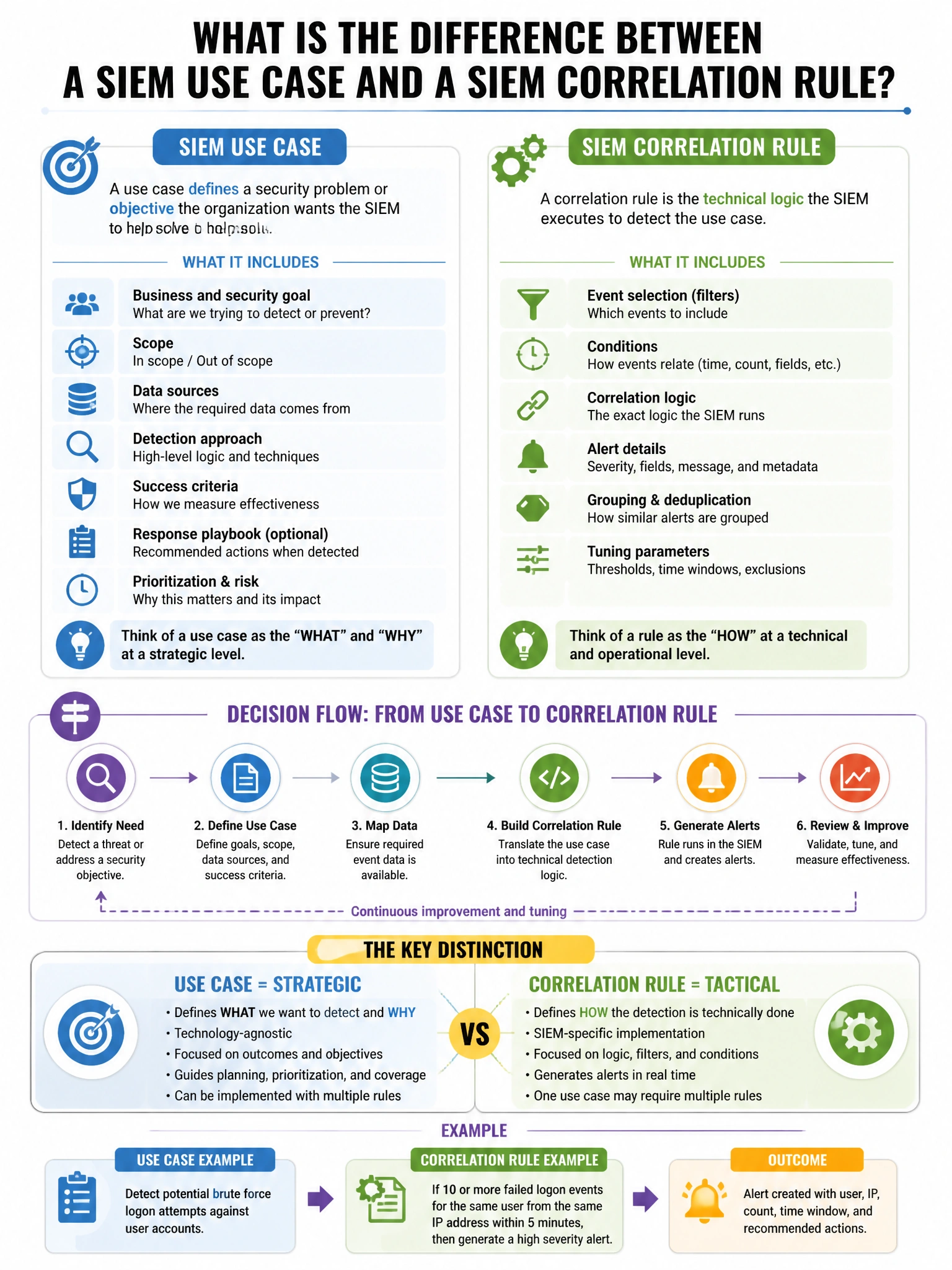
Here's the deal — b is correct because a use case is a documented security scenario defining what to detect and why it matters (e.g., 'detect brute force logins'), while the correlation rule is the technical SIEM implementation (the specific logic, thresholds, and time windows) that operationalizes the use case. A is wrong because these are distinct concepts; a single use case may have multiple correlation rules across different log sources.
Full explanation below image
Full Explanation
B is correct because a use case is a documented security scenario defining what to detect and why it matters (e.g., 'detect brute force logins'), while the correlation rule is the technical SIEM implementation (the specific logic, thresholds, and time windows) that operationalizes the use case. A is wrong because these are distinct concepts; a single use case may have multiple correlation rules across different log sources. C is wrong because use cases can be vendor-supplied or custom; the distinction is conceptual (scenario definition) vs. technical (implementation). D is wrong because both use cases and correlation rules apply across all log source types.