
An organization wants to detect rogue wireless access points connected to the corporate wired network. Which technique is most effective at identifying unauthorized wireless devices?
Select an answer to reveal the explanation.
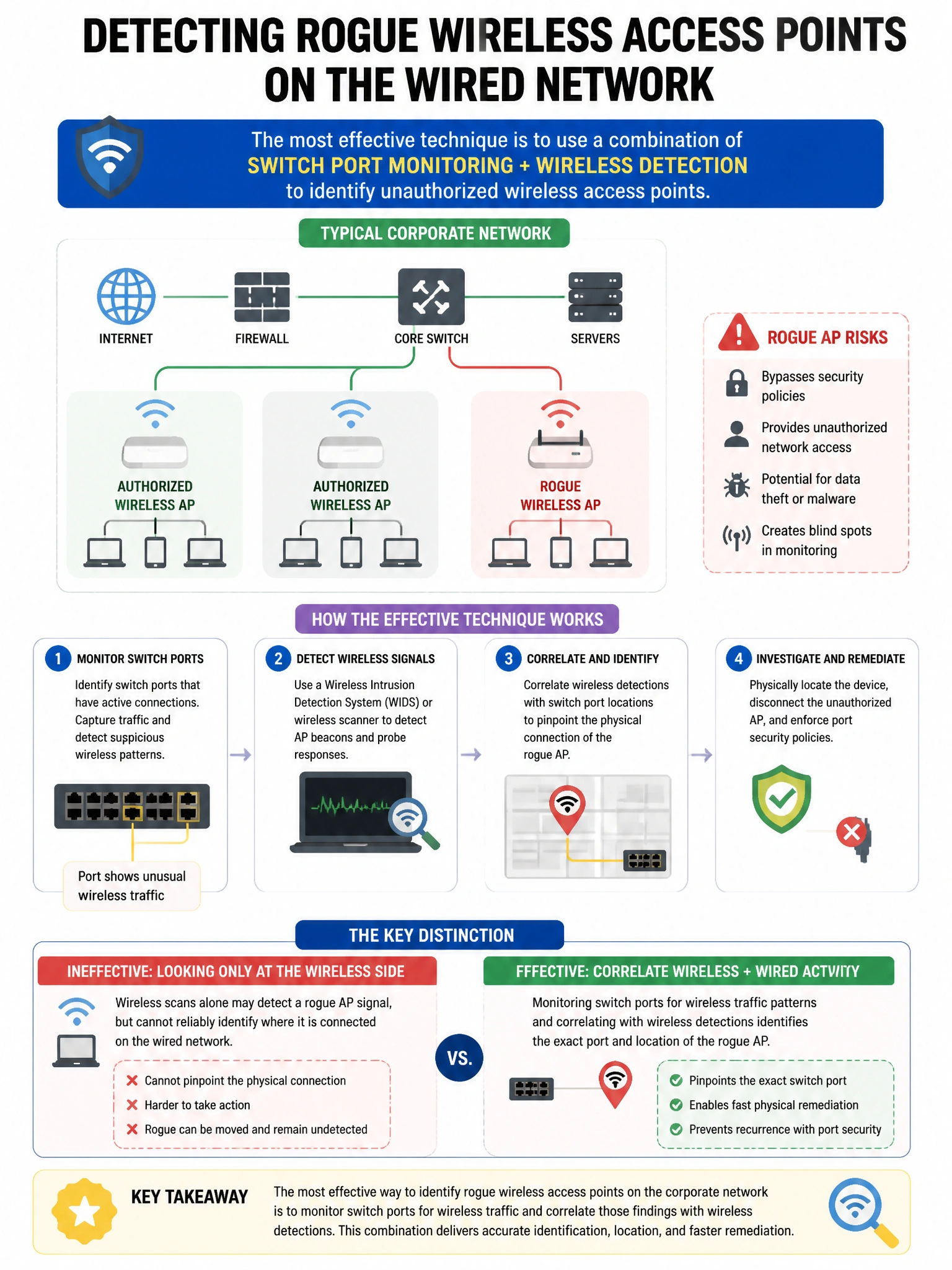
Short Explanation and Infographic
Here's the deal — b is correct because wireless surveys detect all wireless signals in the environment, and correlating discovered BSSIDs against an authorized inventory identifies rogue devices that are not registered; physical surveys also locate rogue AP positions. A is wrong because rogue APs broadcast wirelessly and do not necessarily expose services detectable from the wired network.
Full explanation below image
Full Explanation
B is correct because wireless surveys detect all wireless signals in the environment, and correlating discovered BSSIDs against an authorized inventory identifies rogue devices that are not registered; physical surveys also locate rogue AP positions. A is wrong because rogue APs broadcast wirelessly and do not necessarily expose services detectable from the wired network. C is wrong because RF shielding is impractical for most environments and prevents legitimate wireless too. D is wrong because WEP is a deprecated weak encryption standard; requiring it would reduce security for all devices and would not identify rogues.