
A Linux system administrator wants to implement mandatory access control (MAC) to enforce security policies on running processes, preventing privilege escalation even if a process is compromised. Which technology implements this?
Select an answer to reveal the explanation.
Short Explanation and Infographic
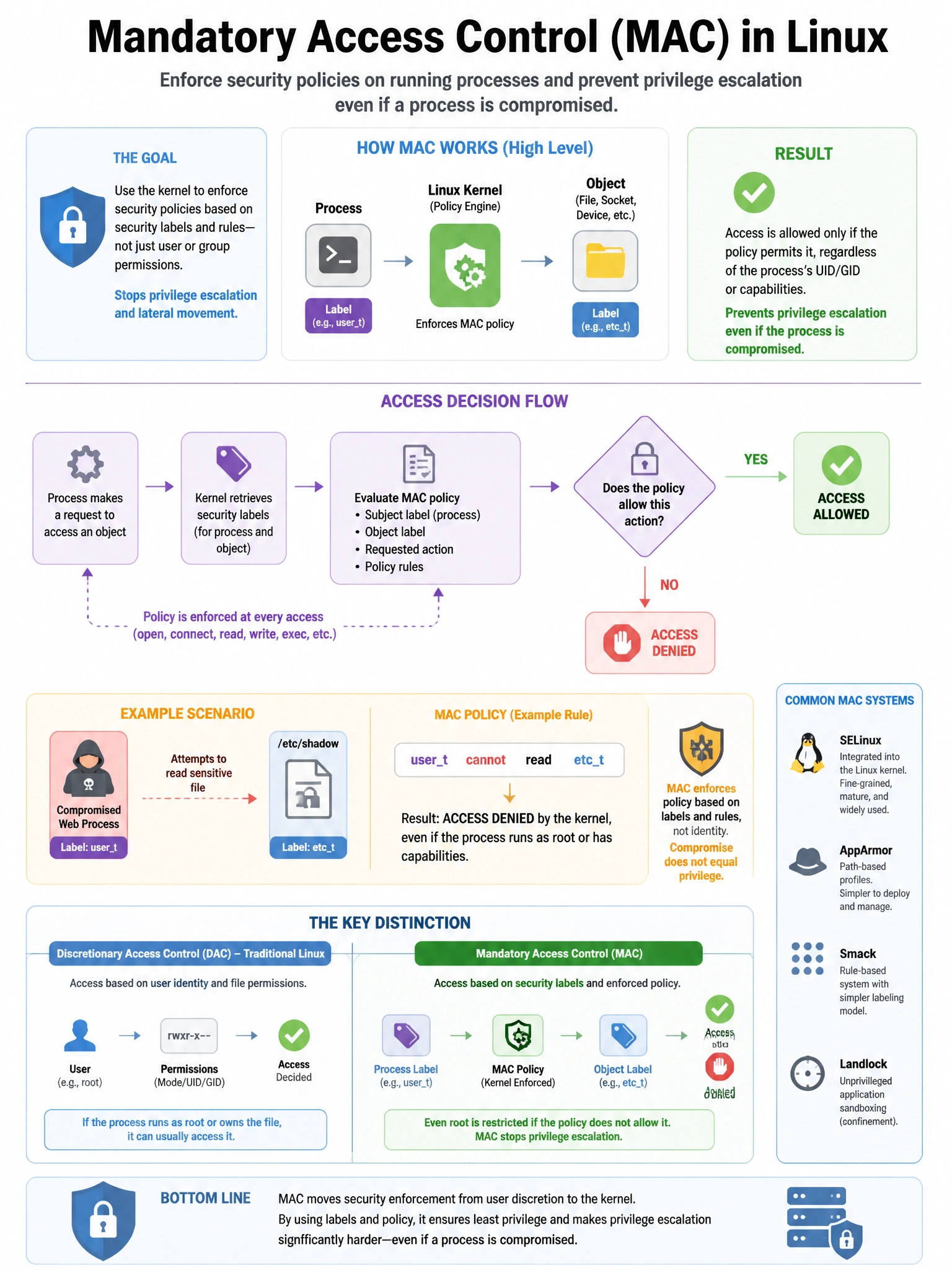
Here's the deal — b is correct because SELinux and AppArmor implement MAC, where security policies defined by administrators (not the process owner) enforce what resources each process can access, limiting the damage from compromised processes regardless of their runtime user. A is wrong because DAC relies on the object owner setting permissions; a compromised process running as the owner can bypass DAC controls.
Full explanation below image
Full Explanation
B is correct because SELinux and AppArmor implement MAC, where security policies defined by administrators (not the process owner) enforce what resources each process can access, limiting the damage from compromised processes regardless of their runtime user. A is wrong because DAC relies on the object owner setting permissions; a compromised process running as the owner can bypass DAC controls. C is wrong because sudo controls command execution elevation, not what a running process can access during execution. D is wrong because PAM handles authentication module configuration, not runtime process access controls.