
A security analyst is tuning a Suricata IDS and finds a single rule generating 10,000 alerts per day, all of which are verified legitimate business traffic. What is the BEST approach to reduce alert noise while maintaining detection capability?
Select an answer to reveal the explanation.
Short Explanation and Infographic
Here's the deal — a is correct because suppression rules allow the analyst to whitelist known-good traffic (specific IPs, ports, or combinations) while preserving detection for the same signature against other traffic. C is wrong because deleting the rule eliminates detection of actual attacks in all contexts.
Full explanation below image
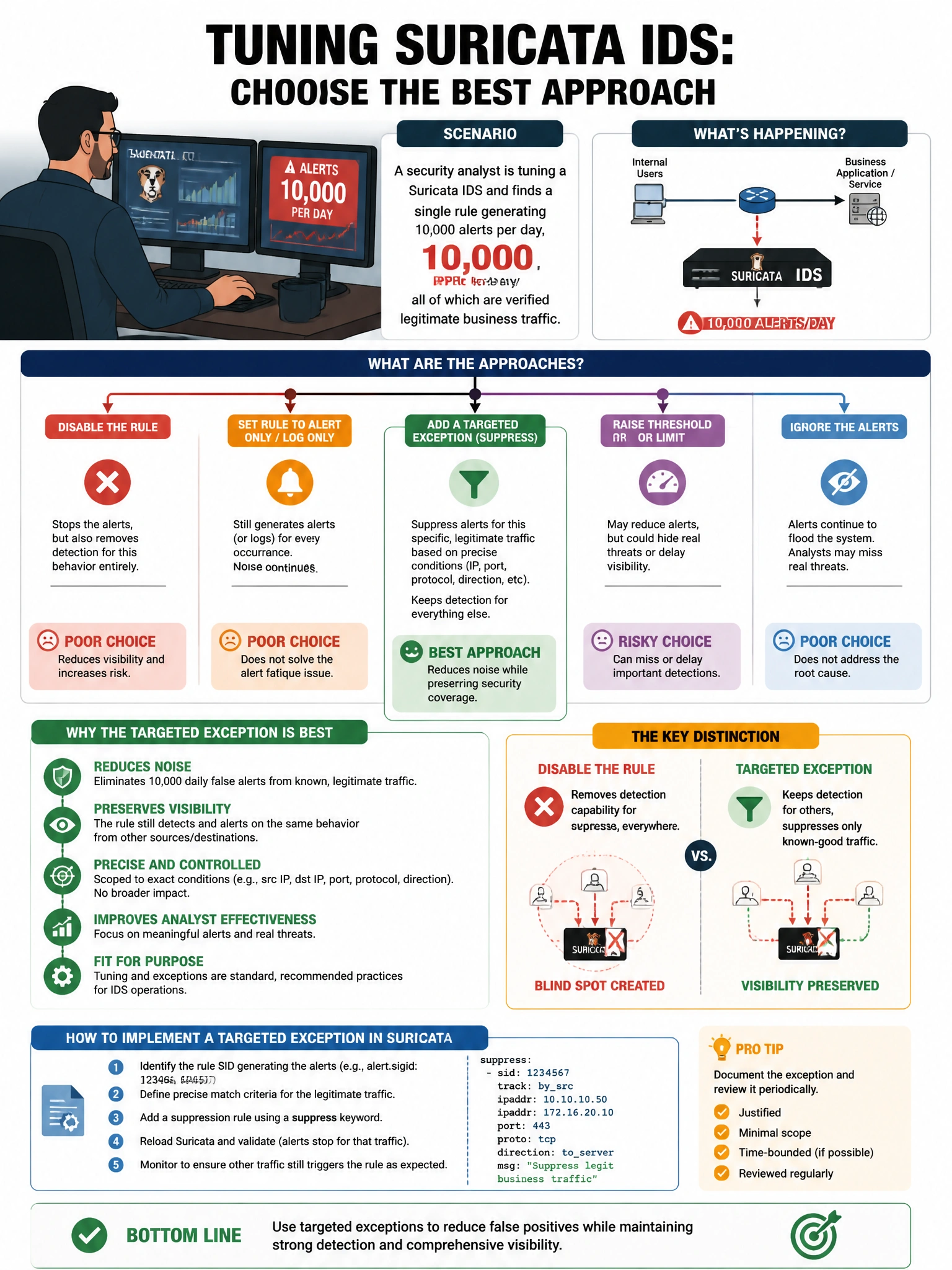
Full Explanation
A is correct because suppression rules allow the analyst to whitelist known-good traffic (specific IPs, ports, or combinations) while preserving detection for the same signature against other traffic. C is wrong because deleting the rule eliminates detection of actual attacks in all contexts. B is wrong because raising the global threshold affects all rules and may suppress legitimate high-severity alerts. D is wrong because disabling an entire category of rules creates broad detection blind spots.